Berwick Mechanics Institute and Free Library Guide
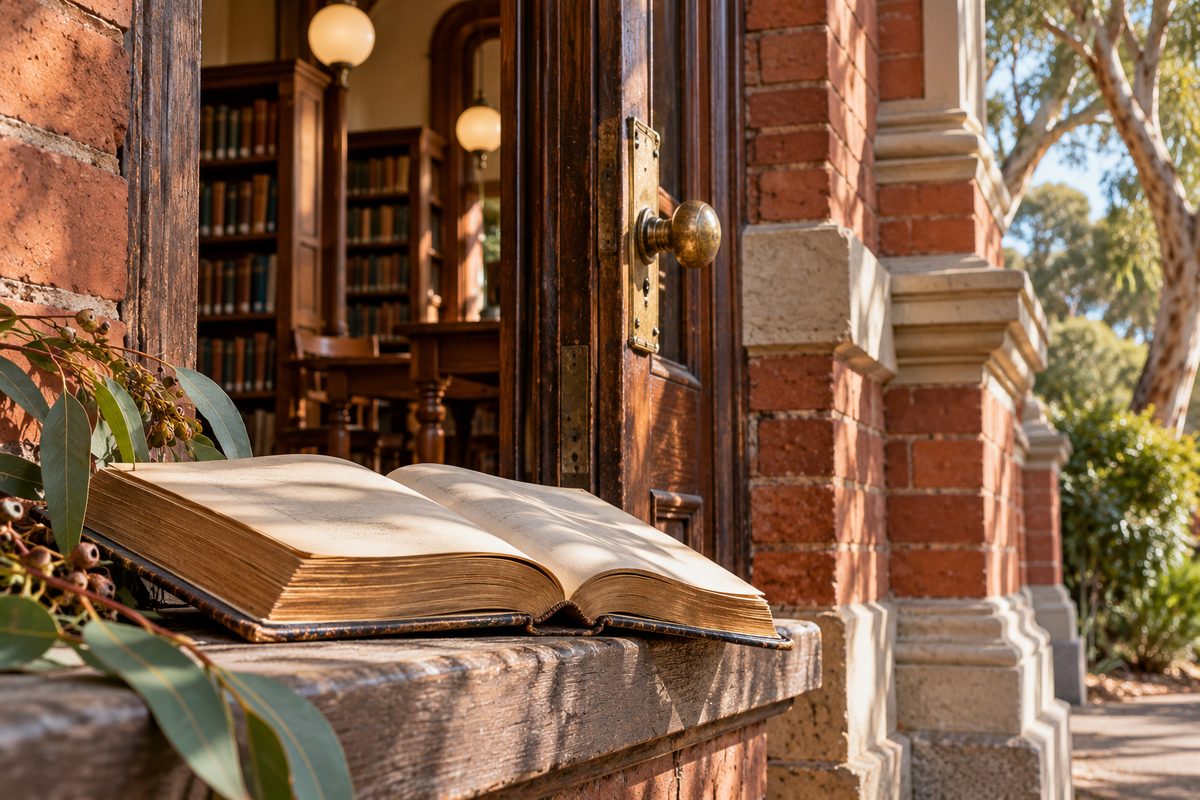
The Berwick Mechanics' Institute and Free Library is a volunteer-run community library and hall in the old Berwick township, and it is separate from the council's public library service. It grew out of the 1800s mechanics' institute movement. That movement gave working people a place to read, learn and meet. If you walk in expecting a modern council branch, you will be confused. If you walk in knowing what it is, you will find one of the oldest working links to the past in Berwick, Victoria.
This guide explains what the institute is and why it exists. It also covers how it differs from the libraries most locals use and how to get the most from a visit. For more on the area around it, see the Berwick Village Notes home page.
What exactly is a mechanics' institute?
A mechanics' institute was a self-help learning centre for working adults. The idea started in Britain in the early 1820s. In that era, a "mechanic" meant a tradesperson or skilled worker, not a car repairer.
The idea reached Victoria quickly. The Melbourne Mechanics' Institution opened in 1839. It later became the Melbourne Athenaeum. From there, towns across the colony built their own halls. Most had a reading room, a lending library and a space for lectures and meetings.
The core purpose was adult education. Few people had access to schooling past childhood. An institute let a farmhand, blacksmith or shop worker borrow books, read newspapers and hear talks on science or farming. Members usually paid a small subscription to keep it running.
Today the peak body is Mechanics' Institutes of Victoria. It supports the remaining institutes and records their history. Hundreds of these halls once existed across the state. Many have closed, been sold or turned into plain community halls. Far fewer still run a lending library.
Why "and Free Library" in the name?
The words "Free Library" were not just a slogan. In colonial Victoria, government grants for libraries were linked to free public access to reading material. Many institutes added "Free Library" to their name to show they met that standard. In practice, that usually meant anyone could read on the premises. Borrowing books to take home often still needed a membership.
This detail is the one most visitors miss. "Free" in the name describes a historical funding arrangement. It does not promise the same service model as a modern council library. Check current membership rules before you assume borrowing costs nothing.
How does the institute fit into Berwick's history?
The institute sits at the heart of the original Berwick township. Long before the area became a growing suburb of Melbourne, Berwick was a small rural centre. Farms, an inn and a few stores served the surrounding district. A mechanics' institute was often one of the first public buildings a town of that kind built. It gave the community a shared space before there was a town hall.
Local government in the area has changed several times. The Shire of Berwick ran the district for much of its history. In 1994, Victorian councils were merged and redrawn. The old shire was split, and most of the Berwick area moved into the new City of Casey. Land to the east went into the new Shire of Cardinia.
The institute outlasted all of those changes. Councils came and went, but the institute kept its own committee and its own building. That is why it still feels separate from council services. It was never created by them.
What does the building tell you?
Look at the building as a record. Mechanics' institute halls usually followed a pattern. There was a front room for reading and books and a larger hall behind it for meetings, dances and lectures. Later additions often show where the community needed more space over time.
Here is a hypothetical example of how to read it. Say you notice a newer section joined to an older brick or timber front. That join usually marks a period when the hall was used more heavily, perhaps for school events or local groups. You do not need a guide to spot this. You only need to look at changes in materials, rooflines and window styles.
How is it different from the public library you already use?
The main difference is who runs it. A council public library is funded by ratepayers and staffed by paid librarians. The Berwick institute is run by its own volunteer committee and members.
Most Berwick residents use the regional library service run for Casey and Cardinia. That service, formerly known as Casey Cardinia Libraries, now operates under the name Connected Libraries. It offers free membership, large collections, digital loans, study spaces and programs. The nearest large branch for many Berwick locals is at Bunjil Place in Narre Warren.
Here is how the two compare in plain terms.
- Management: Connected Libraries is a council-funded public library service. The institute is a community organisation with a volunteer committee.
- Opening hours: Council branches open most days with set hours. Volunteer libraries usually open on limited days and times.
- Collection: Council branches hold large modern collections and eBooks. The institute's collection is smaller and shaped by its members and history.
- Membership: Council library membership is free. Institute borrowing may need a separate membership.
- Feel: A council branch is built for volume. The institute is built around a historic room and a local community.
You do not have to pick one. Use Connected Libraries for study, new releases and digital books. Use the institute for local history, a quieter browse and a direct link to the town's past.
Who gets the most value from a visit?
Three kinds of visitors benefit most, and each should plan differently.
Local history researchers
If you are researching your house, street or family, start here. Volunteer-run institutes often hold local material that a larger library never collected. That can include old photographs, minute books and notes about past events.
A hypothetical example: you are tracing a great-grandparent who farmed near Berwick. A council library database might give you a census entry. A local institute or historical group may be able to point you to the families, farms or events from that time. Ask before you arrive, because volunteers may need to find material in advance.
Readers who want a smaller, slower library
Some people find large libraries tiring. The institute suits readers who like a small room, older titles and a chat with the volunteer on duty. Expect fewer choices but more character.
Families and newcomers
New residents often know Berwick only as a suburb with traffic and new estates. A visit to the institute shows the older town underneath. For children, it is a simple way to show that people here once built a library together because they had no other way to get books. If you are planning a full day out, our guide to free things to do in Berwick can help you pair it with a park.
How do you plan a visit that works?
The biggest mistake is turning up without checking hours. Volunteer libraries do not keep council hours. A locked door on a weekday afternoon is normal, not a sign the place has closed.
Follow these steps.
- Check current opening times. Look for the institute's own website, social media page or noticeboard. Do not rely on old listings.
- Ask about membership before borrowing. Find out the fee, if any, and what ID you need.
- Contact ahead for research. If you want local history material, send a message first so a volunteer can prepare.
- Bring cash or small change. Small community groups sometimes sell second-hand books or take donations.
- Pair it with High Street. The institute is close to the older shopping strip, so it fits easily into a morning in the village.
Why does a volunteer library still matter?
A volunteer library keeps local knowledge in local hands. Council services must serve hundreds of thousands of people across a wide area. They cannot keep every street story, club record or old photograph from one township. A small institute can.
It also keeps a public room open that does not depend on buying anything. Cafes need you to order. Shops need you to spend. A library and hall lets people sit, read and meet for little or no cost. That matters more as an area grows and private space replaces shared space.
The risk is simple. Volunteer groups rely on people. When members age and no one replaces them, opening hours shrink. Collections go unsorted. Buildings get harder to maintain. Many Victorian institutes closed for exactly this reason, not because anyone decided they should.
What does support actually look like?
Support does not have to mean a big commitment. Small actions add up for a group run by volunteers.
- Become a member, even if you only borrow a few times a year. Membership numbers help with grant applications.
- Offer a few hours a month on the desk or sorting books.
- Donate local photographs or papers, or let the group copy them.
- Book the hall for a meeting or small event if hire is available.
- Tell newcomers it exists. Most never hear about it.
What do people usually get wrong about it?
The first error is thinking it is a branch of the council library. It is not. Questions about Connected Libraries cards, eBooks or returns belong with Connected Libraries, not the institute.
The second error is treating it as a museum. It is a working community space. You can borrow, browse and take part. It is not a display behind glass.
The third error is assuming "free" means no fees at all. As explained above, the word comes from a historical funding rule. Ask about current costs rather than guessing.
The fourth error is ignoring the hall. Many people focus only on the books. In mechanics' institute history, the hall mattered just as much. It hosted lectures, dances, meetings and celebrations. It was the town's main indoor gathering place.
Your next step
Check the institute's current opening hours this week and plan one visit around them. Go with a single question in mind, such as how old your street is or what the town looked like before the estates. Ask the volunteer on duty. Then decide if a membership or a few volunteer hours is something you can give. One visit is enough to see why this small building has outlasted the shire that surrounded it.