Edwin Flack Reserve Berwick Guide
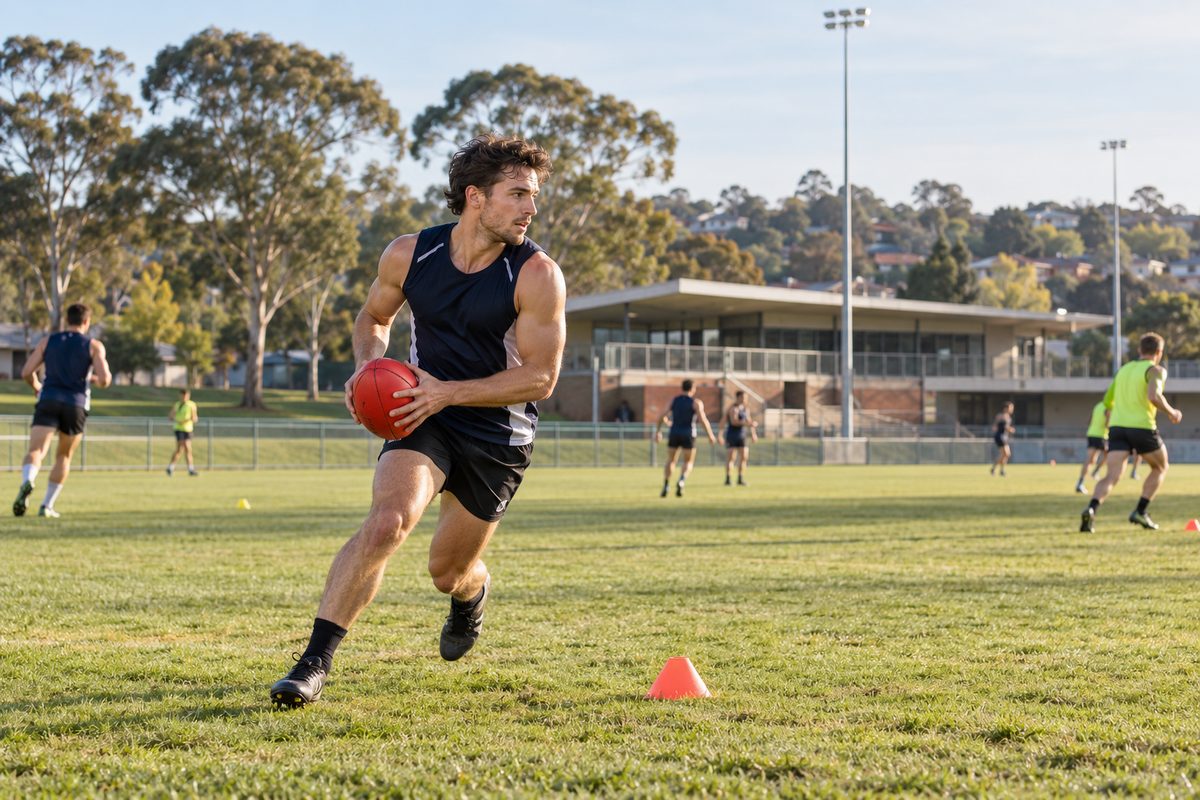
Edwin Flack Reserve is a council-managed sports and open space reserve in Berwick, named after Australia's first Olympic champion, and it works best as a place for local sport, casual exercise and a short history detour. It is not a destination park in the way Wilson Botanic Park is. Think of it as a working community ground with a remarkable name behind it. If you know what it is built for, you will plan a better visit and avoid turning up when the grounds are booked.
This guide covers the man behind the name, how the reserve fits into Berwick's network of parks, and the checks worth doing before you go. For more on the suburb, start at Berwick Village Notes.
Who was the reserve named after, and why Berwick?
The reserve honours Edwin 'Teddy' Flack, the athlete who won Australia's first Olympic gold medals. He did it at the 1896 Summer Olympics in Athens, the first modern Olympic Games.
Flack was born in London in 1873 and moved to Melbourne with his family as a young child. He trained as an accountant and joined his father's firm. Running was something he did around his work. He paid his own way to Athens and travelled largely on his own, with no national team behind him.
At those first Olympic Games, Flack won the 1500 metres and then the 800 metres. He also started the marathon and led for part of it before he collapsed and did not finish. He even entered the tennis, where he and his doubles partner are now credited with a bronze medal.
So why Berwick? Flack had a strong personal link to the area. In later life he owned a property at Berwick, and he died in 1935. He is buried at Berwick Cemetery. Naming a local reserve after him ties a world first to the place he chose to spend his later years.
That link is the angle most guides miss. People treat the name as a label on a sign. In fact it points to a real local connection you can trace on the same day, which makes the reserve more interesting than its ovals suggest.
What is the reserve actually used for?
The reserve's main job is community sport and everyday open space. Expect playing fields, club activity on weekends and people using the grounds for walking, running and kicking a ball around.
Like most reserves in the area, it is managed by the City of Casey. Casey is one of the Local government areas of Victoria, and it is one of the fastest-growing municipalities in the state. That growth matters here. More residents means more junior sport, more training nights and more competition for field time. A reserve like this can be quiet at 10am on a Tuesday and full by 5pm.
Here is how use usually splits across a week at a council sports reserve of this kind:
- Weekday daytime: mostly free for casual use, walkers and small groups.
- Weekday evenings: club training often takes the fields, especially in the main winter and summer seasons.
- Weekends: fixtures and match days, with busier car parks.
Facilities and current club tenants can change between seasons. The City of Casey website lists reserve details and sporting bookings, so check there for what is on site right now rather than relying on an old listing.
How does it compare with other Berwick parks?
Each green space around Berwick does a different job. Picking the right one saves you a wasted trip.
Edwin Flack Reserve versus Wilson Botanic Park
Wilson Botanic Park sits on the Princes Highway in Berwick, on the site of a former quarry. It is a designed garden with lakes, themed plantings and walking paths. You go there to look and stroll. It also has its own rules, including no dogs, which surprises many first-time visitors.
Edwin Flack Reserve is the opposite. It is built for activity. If your plan involves a footy, a cricket bat or a run, choose the reserve. If your plan involves a quiet walk among plants, choose the botanic park.
Edwin Flack Reserve versus Casey Fields
Casey Fields in Cranbourne East is the council's large regional sports precinct. It hosts higher-level competitions and has a much bigger footprint. It draws teams and spectators from across the south-east.
Edwin Flack Reserve is local scale. That is its strength. It is closer for Berwick households, simpler to park at outside match days and easier to use for a quick session after school or work.
Quick decision guide
- Want team sport or open grass close to home: Edwin Flack Reserve.
- Want gardens and a calm walk: Wilson Botanic Park.
- Watching a big regional fixture: Casey Fields.
How do you get there and where do you park?
Drive is the easiest option for most visitors, and parking is generally available at the reserve outside of busy match times. Local streets near sports grounds fill quickly on game days, so arrive early if a fixture is on.
Most people coming from outside the suburb arrive along the Princes Highway or the Monash corridor, then head into Berwick's residential streets. Use a map app with the reserve name for turn-by-turn directions. Reserve entrances can sit off side streets, so the pin matters more than a general Berwick address.
If you are using public transport, Berwick railway station on the Pakenham line is the main rail link, with local buses connecting to surrounding streets. Check the PTV journey planner for the current route, as bus timetables change and some routes run less often on weekends.
Here is a hypothetical example of what can go wrong. A family drives over on a Saturday morning in winter, planning a picnic and some kick-to-kick. They find both car parks full and the main oval in use for junior football. The same plan on a Sunday afternoon or a weekday would likely have worked fine. The fix is simple: check the fixture list first.
How do you check if the grounds are booked?
Look at the City of Casey sporting reserve information and the fixtures of the clubs based at the reserve before you go. That one step solves most problems.
Council sports fields are allocated to clubs by season. When a club holds the ground for training or a match, casual users need to give way. Open areas around the edges usually stay available, but the main playing surface may not be.
There are three practical ways to check:
- Visit the City of Casey website and search the reserve name for facility and booking details.
- Look up the local clubs that use the ground and view their published fixtures or training times.
- Call the council customer service line if you want to book a space for a group or event.
If you plan to run an organised activity, such as a group fitness session or a community event, you will usually need council permission. Casual personal use, like walking or a family kick, does not need a booking.
Which rules apply when you visit?
Standard City of Casey park rules apply. These cover dogs, rubbish, alcohol and use of the sports surfaces.
The points visitors most often overlook:
- Dogs: leash rules apply around sports grounds, especially when sport is being played. Signage at the reserve shows the local rules. Our separate guide on dog walking rules in Berwick parks covers this in detail.
- Playing surfaces: wet grounds may be closed to protect the turf. Respect closure signs, even if the field looks empty.
- Rubbish: take it home if bins are full. Overflowing bins attract birds and spread litter across the fields.
- Alcohol: council parks have local laws on drinking in public places. Check the signs on site.
Can you combine a visit with Berwick's history?
Yes, and this is the best way to get more out of the reserve. Pair it with a short loop through Berwick's older streets.
Berwick, Victoria began as a small township on the main road east from Melbourne. Its historic heart is High Street, which still has older shopfronts, cafes and the feel of a village centre. The Princes Highway once carried traffic straight through, and the town grew around that route.
A simple half-day plan could look like this hypothetical outline:
- Start at Edwin Flack Reserve for a walk, a run or some time on the grass.
- Drive to Berwick Cemetery to see where Flack is buried. Be respectful, as it is an active cemetery.
- Finish on High Street for lunch and a look at the older buildings.
This turns a name on a sign into a story. Kids especially remember the idea that a man from their own suburb won the first Olympic gold medals for Australia. It gives them a reason to ask questions about the 800 metres and the 1500 metres, and about what the Olympics looked like in 1896, when athletes paid their own way and trained around full-time jobs.
What do most people get wrong about the reserve?
The biggest mistake is treating it like a leisure park. It is a sports reserve first. People who expect gardens, cafes or big play spaces leave disappointed. People who come to move leave happy.
The second mistake is ignoring the season. Winter brings football and soccer. Summer brings cricket. The same ground can feel very different between March and July. If you want quiet space, aim for weekday daytime or the short gaps between seasons.
The third mistake is missing the history. Edwin Flack did something no Australian had done before, and he did it as a part-time runner with no team support. His story says a lot about local sport. The reserve named after him hosts the same kind of after-work athletes he was.
Your next step
Before your next visit, spend two minutes on the City of Casey website checking reserve details and the local club fixtures for the day you plan to go. Then choose your time to match your purpose.
- For casual exercise or a family kick, go on a weekday or a quiet weekend afternoon.
- For watching local sport, go on a weekend match day and arrive early for parking.
- For a richer outing, add Berwick Cemetery and High Street to the same trip.
- For gardens rather than sport, head to Wilson Botanic Park instead.
Find more local guides, walks and things to do across the suburb at Berwick Village Notes.