Old Cheese Factory Berwick Community Activities
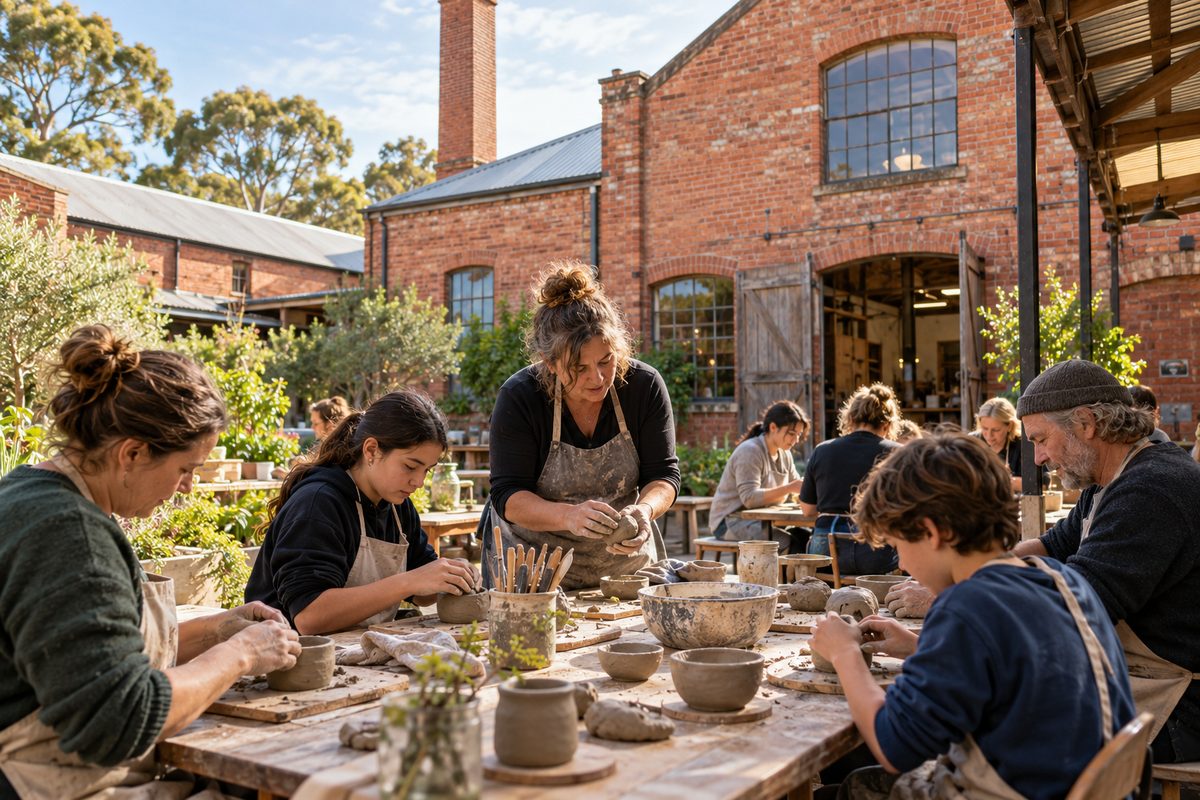
The Old Cheese Factory on Homestead Road is Berwick's main hub for hands-on community groups, with art, craft, pottery and textile activities running in restored dairy-era buildings. Most people know it as a nice spot for a walk or a photo. Fewer know that the real life of the place happens inside, where local groups meet each week to make things. This guide explains what kinds of activities run there, how they work and how to find one that suits you. Group names, times and fees change, so treat what follows as a map and confirm the current details before you go.
What actually happens at the Old Cheese Factory each week?
The site works as a home base for community groups. It is not a single business running one program. Different groups use the buildings and rooms on set days, and each one runs its own sessions.
The activities fall into a few broad types:
- Art groups. Painting and drawing sessions where members work on their own pieces side by side.
- Pottery. Clay work, from hand building to wheel throwing, usually with shared kilns and tools.
- Textile work. Spinning, weaving, knitting and other fibre crafts.
- Other craft groups. Smaller groups that come and go with community interest.
- Events and open days. Days when the public can walk through, watch makers at work and buy handmade pieces.
The key point most visitors miss is this: the Old Cheese Factory is a place you join, more than a place you visit. A casual Sunday stroll shows you the gardens and the old buildings. A weekly group gives you a seat at a table, a set of tools and people who will show you how to use them.
Why does an old dairy building suit art and craft so well?
The site's history explains a lot about how it is used today. The factory dates from the late 1800s, when Berwick was farming country and local dairy farmers brought milk in to be turned into cheese. That dairy past shaped the buildings. They are solid, with thick walls and big open rooms built for work.
Those same features help makers today. Pottery needs space for wheels, shelves for drying work and a safe place for a kiln. Textile groups need room to set up looms and spinning wheels. A working building handles mess, dust and noise better than a polished hall.
There is also a fit between old and new uses. The factory was once a place where locals made a product by hand. Now it is a place where locals make things by hand again. The building has gone from cheese to clay, but the idea of shared work under one roof has stayed.
The site is managed under the City of Casey, the council area that covers Berwick, Victoria. That council link matters for you as a newcomer. It means the site is meant for community use, and many groups there run on a not-for-profit basis with modest fees.
How do the art and craft groups work?
Most groups follow a similar pattern. Knowing it ahead of time takes the guesswork out of your first visit.
Membership and fees
Groups usually charge a yearly membership fee, plus a small session fee or materials cost. The money tends to cover room hire, insurance and shared equipment. Expect group fees to sit well below what a private studio class in Melbourne would charge, since volunteers run most of the sessions.
Session style
Many groups run as open studios. That means members bring their own project and work at their own pace, with experienced members happy to help. Some groups also run structured classes or workshops for beginners, often in short blocks of a few weeks.
This difference matters. If you have never touched clay, an open studio can feel lost and confusing. Ask whether the group runs a beginner course first. If you already have some skill, an open studio gives you more freedom and more time on your own work.
Tools and materials
Shared tools are one of the biggest reasons to join a group. A pottery wheel and kiln cost a lot to buy, and most homes have no space for them. A spinning wheel or floor loom is the same. Groups often let members use equipment once they have been shown how.
Hypothetical example: picture someone who wants to try weaving. Buying a floor loom to test the hobby would be a big outlay with a real risk of regret. Joining a textile group lets that person use a loom for a few months, learn the basics and then decide whether to buy one. The group lowers the cost of finding out.
Which activity should you try first?
Pick based on what you want from the time, not just what looks interesting. Each type of activity gives you something a bit different.
Pottery for a slow, physical hobby
Pottery suits people who like working with their hands and do not mind getting dirty. It is also slow. A pot needs shaping, drying, a first firing, glazing and a second firing. That can take weeks from start to finish. People who enjoy the long wait tend to stay. People who want quick results can get frustrated.
One thing most guides skip: your first pots will probably crack, slump or come out lopsided. That is normal. Groups expect it, and members usually have stories about their own failed early pieces.
Textile work for a portable skill
Textile crafts like knitting, spinning and weaving have one big plus. Once you learn, much of the work can go home with you. That makes textile groups a good choice if you can only get to the factory now and then but want a hobby that fills evenings at home.
Textile groups also tend to be strong on teaching. Skills like spinning are often passed on person to person, so experienced members are used to showing newcomers the basics.
Art for flexible, low-cost practice
Art groups, such as painting and drawing circles, usually need the least gear to start. A sketchbook and a few pencils are enough for a first session. These groups suit people who want a regular, quiet creative slot in their week and enjoy the company of others doing the same.
Other craft for trying things out
General craft groups and one-off workshops are good if you do not know what you like yet. A short workshop lets you test a skill without signing up for a year.
What do open days and markets offer if you are not joining?
Not everyone wants a weekly group. Open days and makers' events are the easy way in.
On these days, groups often open their rooms so visitors can watch work in progress. You might see a potter at the wheel or a spinner turning fleece into yarn. Many events also include stalls where local makers sell their work.
This is where the artisan side of the site shows. The pieces on sale are usually made by people from the local area, often by members of the groups based on site. Buying a mug or a scarf there puts money straight back into local making.
Open days are also the best scouting trip before you join anything. You can talk to members, see the rooms and get a feel for which group suits you. Members at these events are usually keen to explain how their group works and when new people can start.
Event dates are not fixed year to year, so check before you plan a trip around one. The council's events listings and the groups' own pages are the most reliable places to look. For more on what is happening around town, see the local guides at Berwick Village Notes.
What mistakes do newcomers make?
A few common slip-ups can put people off before they give a group a fair chance.
- Turning up without contacting the group. Groups meet on set days, and some have waiting lists or limits on numbers. A quick email or call first saves a wasted trip.
- Expecting a formal class. Many sessions are open studios. If you need step-by-step teaching, ask for a beginner course.
- Judging the whole site on a quiet day. Visit on a weekday when no group meets and the place can feel empty. The activity is tied to group schedules.
- Giving up after one session. The first visit is often the most awkward. Most people settle in by their third or fourth week, once they know names and where things live.
- Buying gear too early. Use the group's tools first. Buy your own only once you know you will stick with it.
How do you get there and plan a first visit?
The Old Cheese Factory sits on Homestead Road in Berwick, a short drive from the village centre. Parking is on site. Because it is in Berwick's south-east Melbourne setting, it is reachable for people across the wider Casey area, not only those who live nearby.
A good first visit looks like this:
- Pick one type of activity you want to try.
- Find the group that runs it and check their meeting days.
- Contact the group and ask if they take newcomers and whether a trial session is possible.
- Ask what to bring and what to wear. For pottery, old clothes are a must.
- Arrive a little early so someone can show you around before the session starts.
Hypothetical example: someone who has just moved to Berwick and wants to meet people might start with a textile group's beginner session. They contact the group on a Monday, learn there is a session on Thursday and turn up with a basic set of needles. Within a few weeks they know a handful of regulars by name. A hobby turns into a social circle, which is often the real reward of community groups.
Why is a community group worth more than a paid class?
A paid class gives you a teacher for a set number of weeks. A community group gives you something that lasts longer: a regular place to go and people who expect to see you.
That steady routine is what keeps people making things. Plenty of people buy craft kits that sit unopened in a cupboard. When a group meets every Tuesday, you have a reason to show up, and showing up is what builds skill.
Groups also hold knowledge that courses often miss. Long-time members know which clay works best in the site's kiln, how to fix a jammed spinning wheel and where to buy supplies locally. That kind of practical know-how is hard to find in a book or video.
For a town like Berwick, where many people are new to the area, the Old Cheese Factory gives a ready-made way to meet neighbours around a shared interest. You come for the pottery wheel or the loom. You stay for the people at the next table.
Your next step
Choose one activity, contact the group that runs it this week and book a beginner or trial session before you buy any gear.
- Decide whether you want pottery, textile, art or general craft.
- Check the City of Casey and group listings for current meeting days and fees.
- Visit an open day first if you want to look around before committing.
- Use shared tools for a few months before buying your own.
- Give any group at least three or four sessions before you decide.