Planning a Family Picnic in Berwick
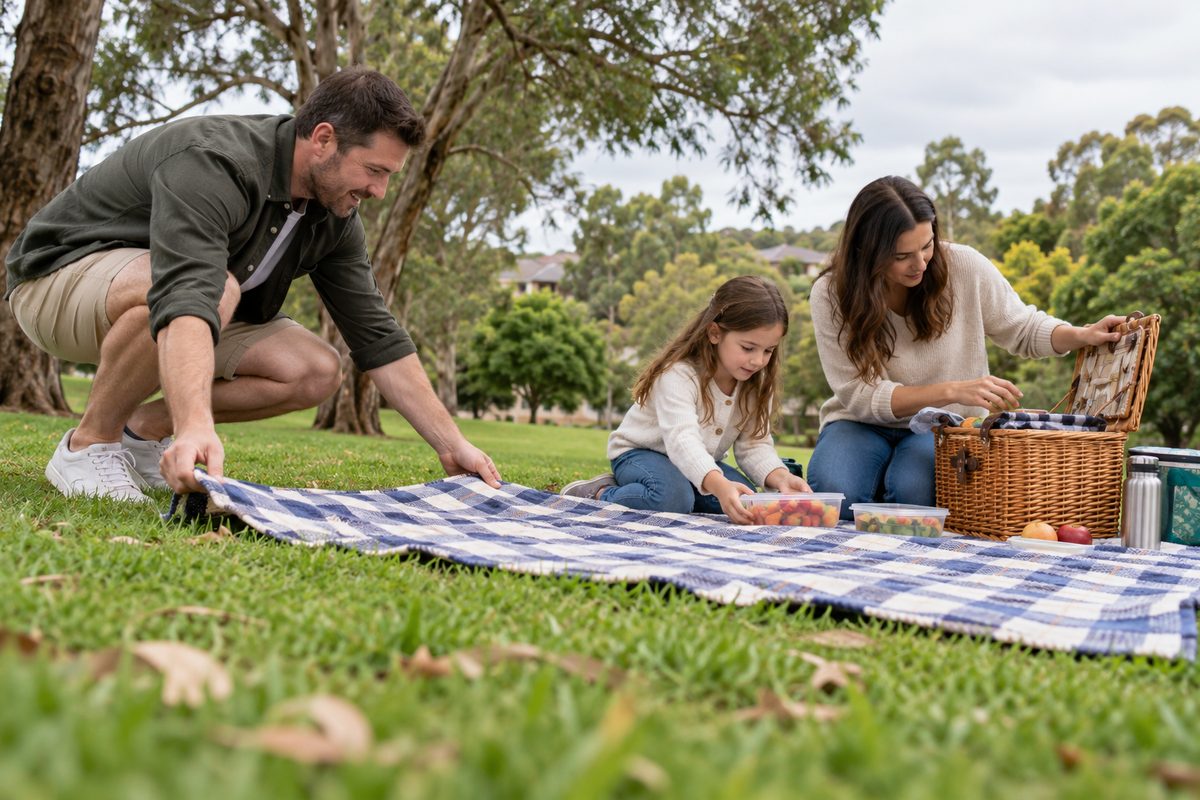
A good family picnic in Berwick starts with three checks the night before: the weather, the UV level and how you will keep cold food cold. Most picnics that go wrong do so for one of those reasons, not because the family picked the wrong park. The spot matters less than the plan. If you sort out timing, food, shade and toilets, almost any open space in Berwick, Victoria will work for an afternoon on a rug.
This guide is about the planning itself. If you are still choosing where to go, the Berwick Village Notes guides cover local parks in more detail. Here, the focus is on the decisions you make before you leave the house.
Why does the plan matter more than the park?
Because the things that end a picnic early are almost always things you could have checked at home. A sudden cool change, a sunburnt toddler, warm chicken sandwiches or a long walk to the nearest toilet will send a family home faster than an average view.
Berwick sits on the south-east edge of Melbourne, and its weather follows Melbourne patterns. A warm morning can turn into a windy, cool afternoon. Spring and summer bring high UV even on mild days. Small children feel all of this sooner than adults do.
Here is a hypothetical example. A family packs a lovely spread for a Saturday in November. The morning is 22 degrees and sunny. They arrive at midday, set up on open grass with no shade, and leave the esky in the car. By 1:30 pm the youngest is red-faced and cranky, the dips are warm, and a southerly is pushing in. Nothing about the park was wrong. The timing, shade and cooling were.
How should you read the forecast for a picnic?
Look at the hourly forecast, not the daily maximum. Weather forecasting from the Bureau of Meteorology gives hour-by-hour temperature, wind and rain chance for Berwick and nearby suburbs. A day listed as 26 degrees might only reach that for two hours in the late afternoon.
Check these points the evening before and again in the morning:
- Wind speed and direction. A gusty northerly makes it hot and dusty. A southerly change can drop the temperature fast. Wind over about 30 km/h makes rugs, paper plates and shade umbrellas hard work.
- Rain chance by the hour. A 30% chance at 4 pm is very different from a 30% chance across the whole day. Plan to pack up before the riskiest hour.
Melbourne weather changes quickly, so the morning-of check is the one that counts. If the forecast has shifted, move the picnic earlier, or swap to a site with a covered shelter.
What does the UV level mean for your timing?
It tells you when sun protection is needed, and it is often higher than the temperature suggests. The Ultraviolet index measures the strength of the sun's burning rays. Cancer Council Victoria's SunSmart program advises sun protection whenever the UV is 3 or above. In Victoria, that is usually the case from mid-August to the end of April, including on cool or cloudy days.
This is the point many picnic guides miss. A pleasant 20-degree spring day can carry a UV level of 8 or more at lunchtime. Children can burn in a short time at that level. The free SunSmart app and the Bureau of Meteorology both show the daily sun protection times for your area.
Use those times to shape your day:
- Aim to arrive before the peak UV window or settle in once it starts easing in the afternoon.
- Pick your patch of grass based on where the shade will fall over the next two hours, not where it sits when you arrive.
A large, mature shade tree gives better cover than most umbrellas, because the shade is wider and moves slowly. Shade cuts UV but does not block it, since rays reflect off grass, paths and water. Hats, shirts with sleeves and sunscreen still matter under a tree. Reapply sunscreen every two hours and after kids have been splashing or sweating.
How much water should you bring?
Bring more drinking water than you think you need, and do not rely on park taps alone. Some parks have fountains or taps, but they can be out of order, far from where you sit, or awkward for small children to use.
A rough guide for a few hours outdoors in warm weather is at least one litre per adult and a full bottle per child, plus extra for washing hands and cooling faces. Frozen bottles, as mentioned above, do double duty. Sweet drinks do not replace water for kids running around in the heat. If a child seems flushed, tired or irritable on a hot day, move them into the shade and get them drinking before anything else.
Why should you find the toilets before you unpack?
Because with young children, the distance to the nearest public toilet decides how relaxed the whole afternoon feels. A toddler who needs the toilet right now and a ten-minute walk do not mix. Walking to and from the toilets also means leaving food, bags and other kids behind.
Before you lay out the rug, find out where the toilets are, whether they include a baby change area, and how long the walk is with a pram. The City of Casey manages most public parks and reserves in Berwick, and its website lists facilities for many of its parks. Check it before you go, since toilets and barbecues are sometimes closed for maintenance.
If the nearest toilet is a long way off, set up closer to it, even if the view is a little less pretty. Parents of toddlers will rarely regret that choice.
What should a picnic first aid kit hold?
A small, family-sized first aid kit should cover the injuries kids actually get at parks: grazes, splinters, bites, stings and minor burns. You do not need a hospital bag. You need the right few items in one place.
- Adhesive strips in kid sizes, plus a few larger dressings.
- Antiseptic wipes or liquid for cleaning grazes.
- Tweezers for splinters and bee stings.
- A cold pack or a spare ice pack from the esky for bumps and stings.
- Any personal medicines, such as an asthma puffer or an adrenaline autoinjector for a child with a known allergy.
- A printed list of emergency numbers, with 000 at the top.
Knowing basic first aid matters as much as the kit. For bee stings, scrape the stinger out sideways rather than squeezing it, then apply a cold pack. For a child with a known severe allergy, follow their action plan and call 000 if symptoms of anaphylaxis appear. If you have never done a first aid course, a short course through a recognised provider is one of the most useful things a parent can do before summer.
How do you deal with insects?
Apply insect repellent before you sit down, especially if you plan to stay into the late afternoon or sit near water. Mosquitoes are most active around dusk and near still water, and flies can be a nuisance on warm days. Choose a repellent labelled as suitable for children and follow the age guidance on the pack.
Covering food matters as much as repellent. Mesh food covers or lidded containers keep flies off. Sweet drinks and open bins attract wasps and bees, so keep drinks in cups with lids or bottles, and check before a child takes a sip. Set up away from bins where you can.
What makes Wilson Botanic Park a good fit for a planned picnic?
Wilson Botanic Park suits families who want gardens, open lawns and walking paths in one place. It is managed by the City of Casey and sits off the Princes Highway in Berwick. The park is built around a former quarry, with lakes, landscaped garden beds and grassed areas that work well for a rug.
A few planning points apply here in particular:
- Check the opening hours on the City of Casey website before you go, because the park has set gate times.
- Check the current rules for pets and barbecues before you plan around them.
- Keep children close near the lakes and steep paths, and bring insect repellent if you will be near the water in the evening.
It is a popular spot on sunny weekends. If shade under a tree is part of your plan, arrive early to claim it.
How do you keep kids happy for the whole afternoon?
Give them something to do besides eating. Kids usually finish their food in fifteen minutes and then want to move. A simple lawn game buys the adults time on the rug and keeps children close by.
Good options pack small and need little setup:
- A soft ball or frisbee for open grass.
- A set of quoits or a beanbag toss for younger children.
- Totem tennis or a mini cricket set for older kids.
- A short nature hunt list, such as "find a feather" or "spot a duck", for quieter moments.
Set up games away from other families and paths, and stay off garden beds. Plan the active time for after lunch, then a calmer activity such as reading or drawing in the shade when energy dips. Leaving while the kids are still having fun beats waiting for the first meltdown.
What should you do before your next Berwick picnic?
Make a one-page checklist and use it every time. The families who enjoy picnics most are not the ones with the best gear. They are the ones who stop forgetting the same things.
- The night before, check the hourly forecast and the sun protection times, then freeze your ice packs and water bottles.
- Check the City of Casey website for your chosen park's toilets, hours and any closures.
- Pack the esky with ice on the bottom and top, and keep risky foods to the cold middle.
- Pack the first aid kit, sunscreen, hats, insect repellent and spare drinking water in one bag that lives by the door.
- On arrival, find the toilets and your shade first, then unpack.
- Throw out any perishable food that has been out of the cold for more than four hours.
Start with the forecast and the esky. Get those two right, and the rest of the afternoon in Berwick usually takes care of itself.
Food safety matters for a family picnic in Berwick, especially when food sits outdoors for a few hours. When you shop at your local grocery store, pick up perishables like meats, salads and dairy last so they stay cold for the trip home. Pack them in an insulated cooler with ice packs, keep raw and ready-to-eat foods in separate containers, and bring hand wipes or sanitiser so everyone can clean up before eating. Put leftovers back in the cooler quickly, or throw them out if they have been sitting in the sun.