Wilson Botanic Park Berwick with Children
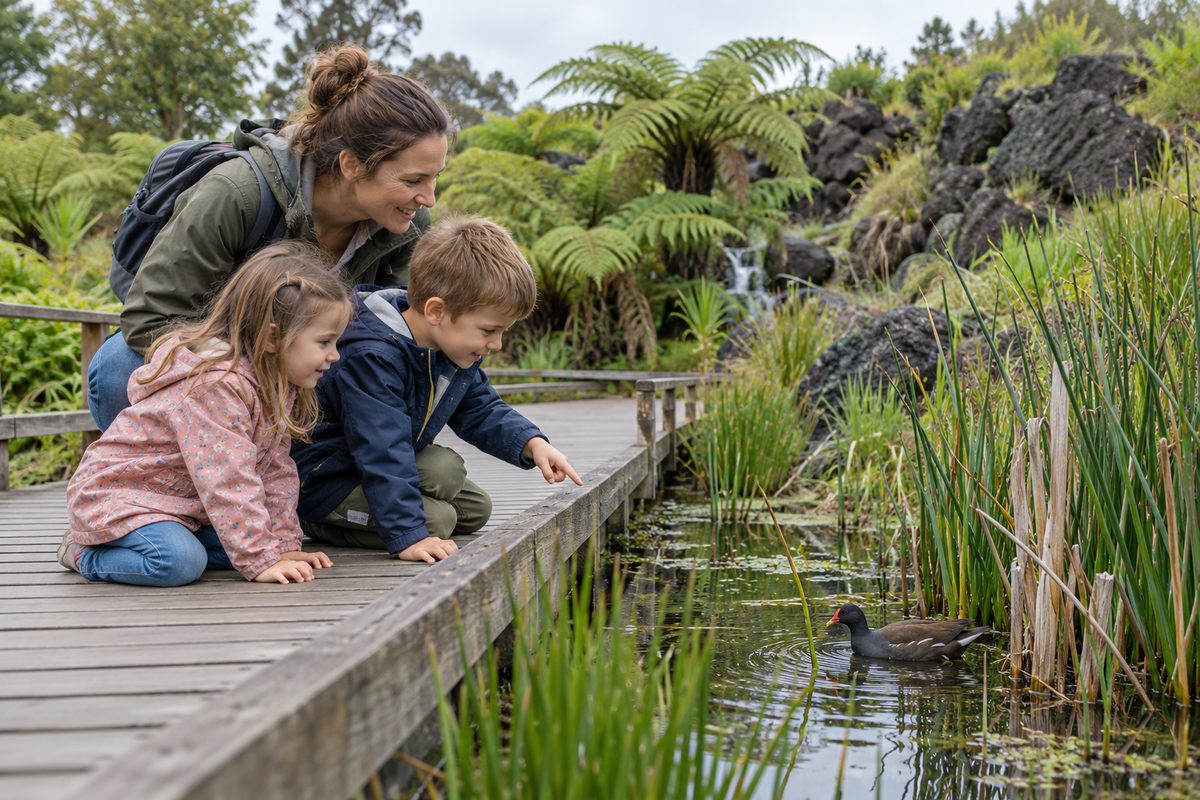
Wilson Botanic Park is a great free outing for children, as long as you treat it as a walking and nature park rather than a playground stop. Kids get lakes, birds, big lawns and winding paths in a garden that was once a working quarry. The visit goes best when you plan around three things. Little legs will meet some steep slopes. You need to keep an eye on the water. The best parts for kids are spread out, so do not try to see the whole park in one go.
This guide is for parents and carers. If you want the general overview of the park, start with the visitor guide on Berwick Village Notes. This article covers what changes when you bring kids.
Why does an old quarry make such a good park for kids?
The quarry history is the reason the park feels like an adventure. Wilson Botanic Park sits on the Princes Highway in Berwick, Victoria. Stone was dug out of the site for decades. When quarrying stopped, the land was turned into a public botanical garden, which the City of Casey now manages.
That past shaped the ground kids will explore. The deep pits became lakes. The cut rock faces became cliffs and ledges. The paths climb up and drop down instead of running flat. To a child, this feels like a place to discover. A flat suburban garden rarely gives them that.
It also means the park has real edges. There is deep water and there are drops. Parents who know this before they arrive have a calmer visit than parents who find out halfway round with a toddler running ahead.
What kids tend to notice first
- The lakes. Water birds, reflections and the chance to spot fish or turtles keep young kids busy for longer than most adults expect.
- The rock walls. The old quarry faces look huge from below. They are a good chance to explain where the stone went and how the park was made.
- The open lawns. Grassed areas give kids space to run between walks.
- Plants they can see up close. Odd shapes, big leaves and seasonal flowers get questions, even from kids who say they are bored.
Is there an adventure playground inside the park?
Do not plan your day around play equipment. Wilson Botanic Park is a botanical garden first. Most of its space goes to plant collections, lakes, lawns and walking paths. It is not a big adventure playground like the ones families drive across Casey to visit.
This is the point most family guides miss. Parents bring kids expecting slides and climbing frames, the kids ask "where's the playground?" within ten minutes, and the outing turns into a negotiation.
A better plan is to use the park for what it does well, which is exploring, spotting animals and walking. Then pair it with a playground stop before or after if your kids need one. Casey Council lists its parks and playgrounds online, so check there for the closest adventure playground on your route home. Our roundup of free things to do with kids on Berwick Village Notes also has playground ideas nearby.
A hypothetical example: a family with a four-year-old and a seven-year-old plans a 90-minute garden loop, a picnic, then 30 minutes at a playground on the way home. The kids know the playground is coming, so the walk feels like part of the trip. It does not feel like a chore standing between them and the fun part.
How do you keep kids safe around the water and cliffs?
Hold hands near the water and stay on the formed paths. Those two habits cover most of the risk.
The lakes formed in old quarry pits. You should assume they are deep and drop away quickly from the edge. Some areas have fences or barriers. Others are open so that people can enjoy the view. A toddler can reach the water's edge in seconds.
Simple rules that work
- Set a "stop point" rule. Before you start, tell kids they must stop and wait at every bridge, lake edge and path junction. Practise it once at the first one you reach.
- Use a carrier for under-twos near the lakes. A pram can roll on a slope. A carrier keeps both your hands free.
- Keep kids off the rock faces. The quarry walls are not climbing walls. Loose stone and sheer drops make them unsafe.
- Stay on the paths. It protects the garden beds. It also keeps kids away from banks that look solid but are not.
- Agree on a meeting spot. For older kids who walk ahead, pick an easy landmark such as the main car park or the toilet block.
None of this should scare you off. Thousands of families visit safely every year. The park simply rewards adults who give the rules before the kids get excited, not after.
Will a pram, toilet stops and snacks be easy to manage?
Yes, with a little planning. There is a public toilet near the main entry area. The main paths are wide and suit prams. Some routes are steep, and some of the side tracks are rougher.
Prams and scooters
Because the park was cut into a quarry, the paths rise and fall between levels. A light pram copes fine on the main loop. A heavy double pram on a hot day is hard work going uphill. If you can, bring a carrier as a back-up so a tired toddler does not end up being carried in your arms up the steepest section.
Bikes and scooters are a different matter. Botanic gardens often limit wheeled toys to protect plants and walkers. Check the signs at the entrance or Casey Council's park rules before you bring them. If they are not allowed, leave them in the car and promise a ride at a playground later.
Toilets
Plan a toilet stop at the start. The public toilet sits near the entry, not in the far corners of the park. Once you are deep in the garden, getting back takes a while with a child who needs to go now. Toilet first, walk second.
Food and water
Pack more water than you think you need, especially from November to March. The quarry bowl can trap heat and there is not shade on every path. Picnic areas and lawns make good snack stops. Bring a bag for your rubbish and take it home with you. That keeps the lakes clean and the birds healthy.
How long should a family visit take?
For most families, one to two hours is the right length. Match it to the age of your youngest child, not your oldest.
- Babies and toddlers (0 to 3): about 45 to 60 minutes. Choose one lake, one lawn and one snack. Leave before the meltdown, not after it.
- Preschoolers (3 to 5): about 60 to 90 minutes. Give them a job, such as counting ducks or finding three red flowers. Jobs keep them walking.
- Primary school kids (6 to 12): two hours or more. Let them read the map, choose the route and lead the walk. Older kids often enjoy the quarry story more than the plants.
Morning visits usually work best. The light is softer, it is cooler in summer and the park is quieter. Weekend afternoons in spring get busy, which makes it harder to keep track of a fast walker.
Which rules catch families out?
The rules are about protecting the garden and its wildlife. Kids follow them better when you explain why.
- Do not feed the birds. Bread and snacks make ducks sick and pollute the lakes. Let kids watch and count them instead.
- Do not pick flowers or plants. Each plant is part of a collection. A good swap is letting kids take photos of their favourites.
- Check the dog rules before you go. Many botanic gardens limit dogs to protect wildlife. Check current Casey Council signage before bringing the family dog.
- Watch the closing time. The park opens in the morning and closes around dusk. Times change with the seasons, so check before an afternoon visit and do not get caught at a locked gate with tired kids.
Who looks after the park, and why should kids know?
The City of Casey owns and manages Wilson Botanic Park, and volunteers do a lot of the hands-on work. The Friends of Wilson Botanic Park are a volunteer group who help with planting, care of the collections and community activities.
Telling kids about this changes how they see the place. A garden that strangers plant and weed for free becomes a garden worth looking after. Some families find that kids who hear about the volunteers stay on the paths without being told twice.
Keep an eye on the Friends of Wilson Botanic Park and Casey Council channels for school holiday and seasonal events. Guided walks or family activities give kids a reason to come back, and a second visit is usually easier than the first because they already know the layout.
What do families most often get wrong?
Most rough visits come from a mismatch between what the kids expected and what the park is. These are the common ones:
- Promising a playground. Set expectations in the car. Call it a nature walk with lakes and birds.
- Trying to see everything. The park covers a lot of ground across different levels. Pick one area and do it properly.
- Skipping the toilet at the start. The far end of the park is a long walk from the public toilet.
- Underestimating the hills. A loop that looks short on a map can wear out a three-year-old fast.
- Arriving in the midday heat. Summer visits work better early in the day.
- Giving safety rules too late. Explain the stop points before kids see the water, not while you chase them towards it.
How does the park fit into a day out in Berwick?
The park sits right on the Princes Highway, so it is easy to add to other plans. A garden walk in the morning can be followed by lunch in Berwick Village, a playground stop, or a run on another open green space nearby. Each of these keeps the park as the calm part of the day rather than the whole day.
For more local ideas, browse Berwick Village Notes, which covers places to eat, explore and play around Berwick, Victoria.
Your plan for the first family visit
The single most useful thing you can do is decide on one small route and one rule before you leave home. Kids who know where they are going and what the stop points are enjoy the park more, and so do you.
- Check the basics on the day. Look up current opening hours and park rules on the Casey Council website.
- Tell the kids what to expect. Lakes, birds, rocks and a picnic. No slides, unless you have a playground stop planned afterwards.
- Pack properly. Water, snacks, a hat, sunscreen, a rubbish bag and a carrier for little ones.
- Go to the toilet first. Use the public toilet near the entry before you set off.
- Give the stop-point rule. Practise it at the first bridge or lake edge.
- Pick one area. Explore one lake and one lawn well instead of rushing the full loop.
- Leave on a high. Head home while the kids still want more. That is what makes them ask to go back.