Restaurants on High Street Berwick
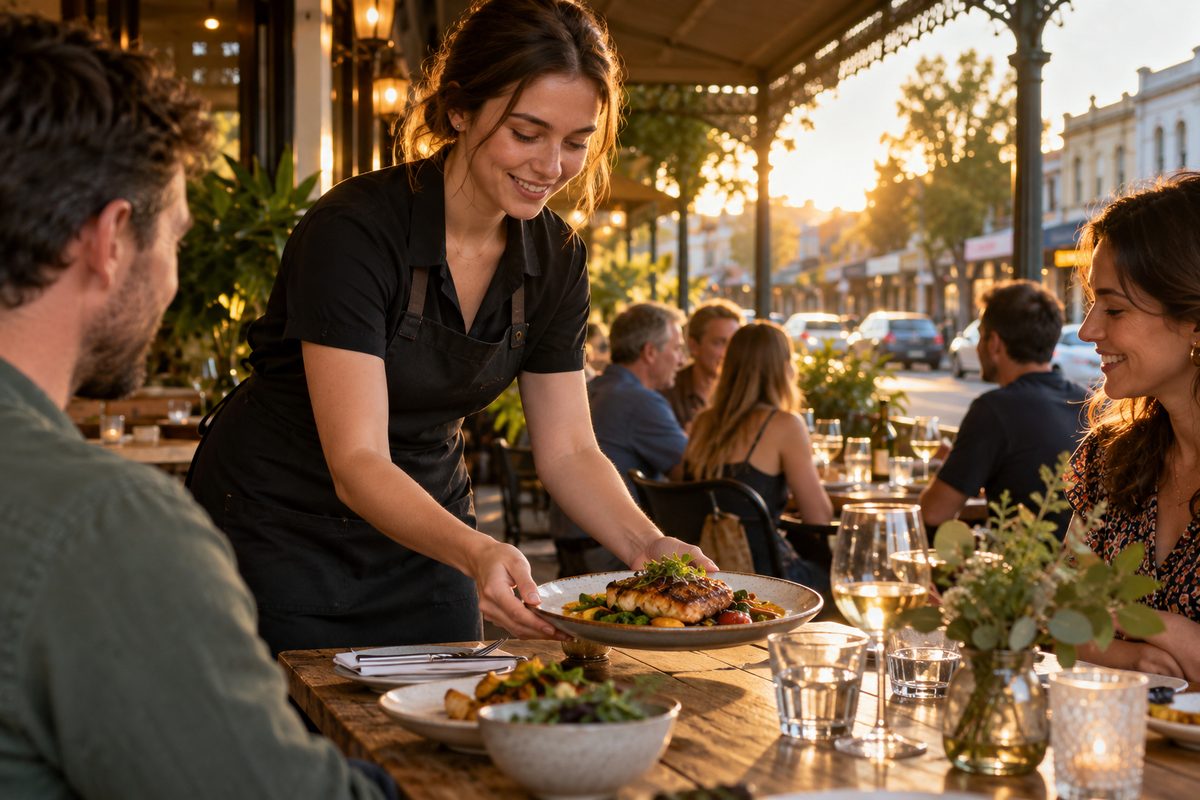
High Street is the main place to eat out in Berwick, with dozens of cafes, restaurants and bars along one walkable strip. You can choose by cuisine, price and mood without moving the car. Most of the work is choosing a restaurant that fits your night, so this guide covers how the strip works, what the menus usually look like, and how to avoid the usual mistakes. It does not rank individual venues, because venues change owners, menus and hours often. Check a venue's own website or social page before you go.
For more local guides, visit Berwick Village Notes.
What makes High Street the dining centre of Berwick?
Most of the old town sits on High Street. Berwick, Victoria grew as a coach stop on the road between Melbourne and Gippsland, and its shops were built along that road. That road was once the main highway route. Today the Princes Highway runs a short drive south of the village, so High Street gets slower traffic and more people on foot.
That history matters when you are choosing where to eat. Berwick Village is compact. The heritage shopfronts, wide footpaths and street trees mean many venues sit within a few minutes' walk of each other. If your first choice is full, you can usually walk to a second option instead of driving across the City of Casey to find one.
Compare that with Narre Warren, the next suburb west. Much of Narre Warren's eating sits in and around large shopping centres. Those suit a quick meal with kids or a chain restaurant before a movie. High Street suits a slower meal, a date night, or lunch with someone you want to talk to.
How the strip changes through the day
High Street works in shifts. Mornings belong to cafes. Lunch brings a mix of office workers, retirees and parents between school runs. From late afternoon, the bars and dinner restaurants fill up, especially from Thursday to Saturday.
Some places that are busy cafes at 9 am close by 3 pm. Others only open for dinner. A common mistake is assuming a venue with a full breakfast crowd will also serve dinner. Many will not. Check opening hours for the meal you actually want.
What kind of food can you actually get there?
Expect a wide spread, with modern Australian cuisine and Asian cuisines most common. Over the years the strip has included Italian, Thai, Japanese, Indian, Mexican, Greek-style grills, burger bars, pubs and casual cafes. The exact mix shifts as leases turn over, but variety has stayed steady.
Modern Australian menus
Australian cuisine on a menu usually means modern Australian. That is a loose style, not a fixed set of dishes. Think local beef or lamb, barramundi, seasonal vegetables, and borrowed flavours from Asia and the Mediterranean on one plate. These menus tend to change with the seasons, so a dish you loved in winter may be gone by spring.
Set menus and table d'hôte
Some restaurants offer a set menu, especially for groups or on busy nights. The classic French term is table d'hôte: a fixed menu with a fixed price, often with a small choice at each course. On High Street you will more often see it called a "set menu", "banquet" or "feed me" option.
Here is a hypothetical example of why this helps. Say eight people book a Friday dinner. If everyone orders separately, the kitchen sends out food at different times and the bill turns into a long sum at the end. With a set menu at a fixed price per head, food arrives together and the bill splits evenly. Many venues require a set menu for groups above a certain size, so ask when you book.
Casual and takeaway options
Not every meal on High Street is a sit-down affair. Pizza, burgers, dumplings and kebab-style shops sit alongside the restaurants. Many venues also appear on food delivery apps such as Uber Eats, DoorDash and Menulog. Prices on those apps are often higher than at the counter, and some dishes travel badly. Fried food and noodles in broth suffer most. If you live nearby, picking up your order yourself usually costs less and the food arrives hotter.
How do drinks work at Berwick restaurants?
Most dinner restaurants on High Street serve alcohol, but not all of them, and BYO rules vary. A venue needs a liquor license to sell drinks. In Victoria it is spelled "licence", and licences are issued by the Victorian Liquor Commission. The licence type sets the trading hours, whether drinks must come with a meal, and whether BYO is allowed.
What this means for you:
- Check BYO before you bring a bottle. Some licensed restaurants allow BYO wine for a corkage fee. Others refuse it. Unlicensed cafes may allow it or may not.
- Ask about corkage. Corkage is often charged per bottle or per person. On a large table it can add up fast.
- Late drinks need a bar, not a restaurant. Some restaurant licences require food with drinks, and kitchens close earlier than bars.
Where a wine bar fits in
A wine bar suits a different kind of night from a full restaurant. You get smaller plates, a longer drinks list and less pressure to order three courses. Berwick has had small bars along and near High Street, and they work well before or after dinner somewhere else. A sensible plan for a date night is a drink at a wine bar at 6 pm, dinner at 7 pm, then a walk along the street.
Where does coffee fit into a restaurant visit?
Coffee matters on High Street more than most diners expect. Australia takes coffee seriously, and specialty coffee is now the standard at many Berwick cafes. Specialty coffee means beans graded for quality and traced to a farm or region, usually served by trained baristas.
Some cafes in the area work with local coffee roasting businesses, and a few have roasted their own beans. Coffee roasting close to the cafe usually means fresher beans. Fresh beans give more flavour and less bitterness.
The useful tip for diners is this. Dinner restaurants do not always make coffee as well as the daytime cafes do. If coffee after a meal matters to you, ask whether the restaurant uses a proper espresso setup. If you are eating lunch, a short walk to a specialty cafe for your coffee often beats the house coffee at a restaurant.
Is outdoor dining on High Street worth booking?
Yes, from spring to early autumn, and on mild winter afternoons. Many venues have footpath tables or rear courtyards. Footpath trading on council land needs a City of Casey permit, so the number of outdoor tables at each venue is limited.
Outdoor dining has a few catches:
- Outdoor tables often cannot be booked. Many venues seat them on a walk-in basis. If you want one, arrive early or ask whether they can hold one for you.
- Melbourne weather turns fast. A warm afternoon can become a cold, windy evening. Bring a layer even in summer.
- Traffic noise is real. High Street is slower than a highway but still busy. A rear courtyard is quieter than a footpath table.
Outdoor tables are often the best choice for dog owners. Dogs are generally not allowed inside food premises in Victoria, apart from assistance animals, but many venues welcome dogs at outdoor tables. Ask first rather than assuming.
How do you eat out on High Street with a dietary need?
Call ahead, and be specific. Most restaurants on the strip can handle vegetarian and dairy-free requests. A gluten-free diet needs more care, because "gluten-free" on a menu does not always mean safe for someone with coeliac disease.
The difference is cross-contact. A kitchen can make a dish with no gluten ingredients and still contaminate it through a shared fryer, chopping board or pasta water. People who avoid gluten by choice may not mind. People with coeliac disease will.
Ask these questions when you book:
- Do you have a separate fryer for gluten-free food?
- Is the gluten-free pasta or pizza base cooked in separate water or on a separate tray?
- Can the chef tell me which sauces and marinades contain wheat or soy sauce made with wheat?
A hypothetical case shows why the second question matters. A diner orders gluten-free pasta. The kitchen cooks it in the same pot of water used all night for regular pasta. The dish is labelled gluten-free but carries gluten. A two-minute phone call would have caught that. Coeliac Australia also runs a venue accreditation program, which some diners use as a starting point.
How do you get there and park?
Drive if you must, but expect to circle on Friday and Saturday nights. High Street has on-street parking with time limits, plus side streets and car parks behind the shops. Time limits are enforced during the day, so read the signs before you settle in for a long lunch.
Public transport is a real option. Berwick station on the Pakenham line is within walking distance of the village. Taking the train means nobody has to be the driver, which makes the wine bar plan above far easier.
Combining dinner with Wilson Botanic Park
Wilson Botanic Park sits on the Princes Highway, a short drive from High Street. It is a former quarry turned into gardens with lakes, walking paths and lookouts. A late-afternoon walk there followed by an early dinner on High Street makes an easy outing, especially with visitors from out of town. Check the park's gate closing times before you plan, because they change with the season.
When should you book, and when can you walk in?
Book for Friday and Saturday dinner, for any group of five or more, and for Mother's Day, Father's Day and the December lead-up to Christmas. Walk in for weekday lunch and early weeknight dinners.
The busiest window is usually 6.30 pm to 8 pm on Friday and Saturday. If you cannot book, arrive before 6 pm or after 8 pm. Kitchens are calmer then, and service is often better.
Watch for these booking details:
- Time limits. Busy venues may give you a table for 90 minutes or two hours. Ask when you book so you are not rushed through dessert.
- Deposits. Larger groups may need to pay a deposit or give card details. Cancellation fees are common.
- Public holiday surcharges. Many Victorian venues add a surcharge on public holidays to cover higher wages. It should be shown on the menu or bill.
How do you pick the right restaurant for your night?
Start with the purpose of the meal, then match the venue to it. Most bad nights out come from a good restaurant chosen for the wrong occasion.
- Date night: a smaller venue with a short menu and good wine, booked for 7 pm or later. A drink at a wine bar first sets the pace.
- Family dinner with young kids: an early sitting at 5.30 pm, a venue with a kids' menu, and a table near the door or outside.
- Big group celebration: a venue that offers a set menu or table d'hôte option, booked at least a week ahead.
- Quick weeknight meal: a casual Asian, pizza or burger spot, or pick-up rather than food delivery.
- Visitors from Melbourne: Wilson Botanic Park in the afternoon, then modern Australian cuisine on High Street.
Read recent reviews, not old ones. A venue's reviews from three years ago may describe a different chef or owner. Look at photos posted in the last few months and the current menu on the venue's own site.
What should you do before your next meal out?
Decide what kind of night you want, then make one phone call. That call should confirm the opening hours, whether you need to book, the BYO and corkage policy, and any dietary needs. It takes three minutes and prevents most of the problems people have with eating out.
Your action list:
- Pick the occasion first: date, family, group or quick meal.
- Check the venue's current hours and menu on its own website or social page.
- Book for Friday or Saturday dinner and any group of five or more.
- Ask about BYO, corkage and set menus if they apply to you.
- If anyone needs a gluten-free diet for medical reasons, ask about separate fryers and cooking water.
- Take the train or check parking signs before you settle in.
Make the call this week, and your next High Street dinner will run the way you planned it.