Wilson Botanic Park Berwick Accessibility
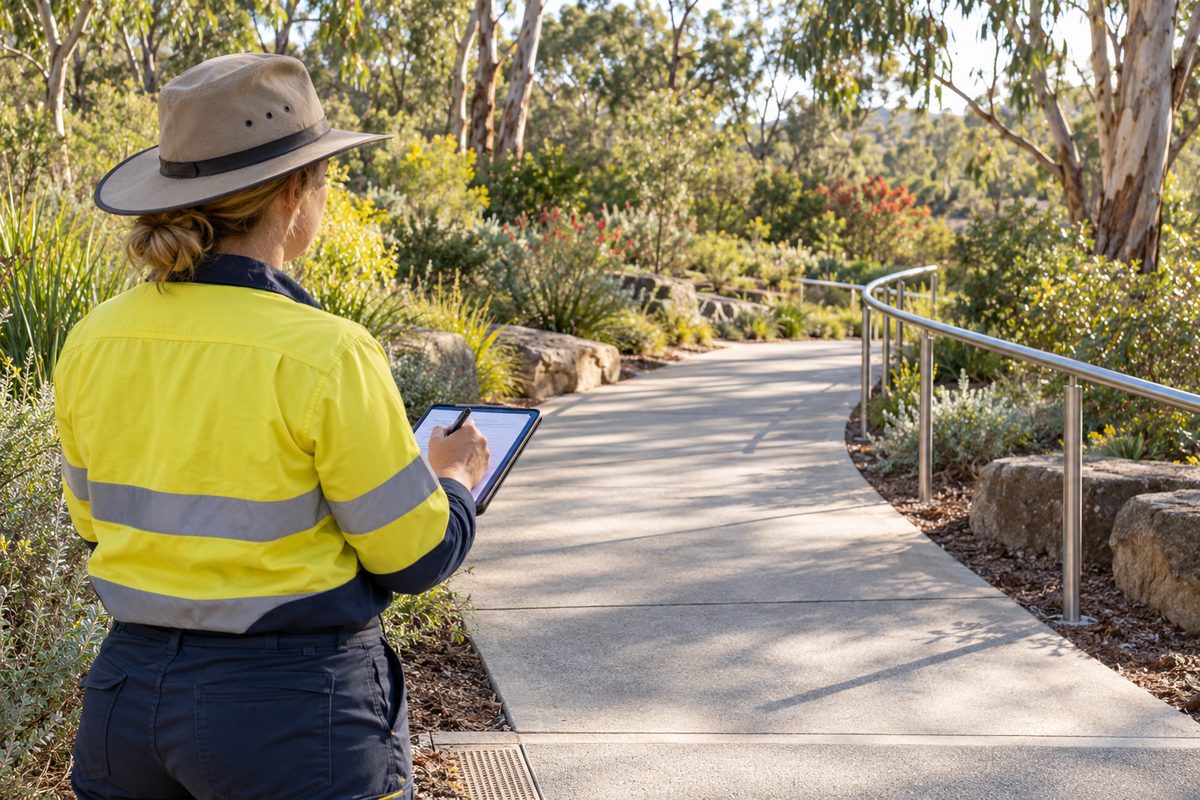
Wilson Botanic Park is reasonably accessible for wheelchair users, prams and people who walk slowly, provided you stay on the main sealed paths around the upper level and plan your route before you go down toward the water. The park sits inside a former quarry, so the hard part is the height difference, not the paths themselves. If you know where the land drops, you can enjoy most of the park without a struggle.
This guide focuses only on access. It covers how the slopes work, where the easier routes sit, what facilities to expect and how to get there without a car. If you want a general first-visit plan instead, start with the guides on Berwick Village Notes.
Why does the landform matter more than the paths?
The park's shape decides almost everything about access. Wilson Botanic Park is a botanical garden built in an old basalt quarry on the Princes Highway in Berwick, Victoria. When the quarry closed, the deep pit filled with water and became the Quarry lake. The gardens were then planted on the rim and down the sides.
That history creates two very different zones:
- The upper level. This is the flatter ground near the entry, the car park and the main facilities. Paths here are wider and gentler.
- The slopes and lake edge. To reach the water you go down, and then you have to come back up. Some sections are steep enough to tire a manual wheelchair user or a carer pushing one.
Most access problems in this park come from people heading downhill without thinking about the return trip. Going down feels easy. Coming back up is where a visit can go wrong.
What does "steep" mean in practice?
Here is a labelled hypothetical. Picture a carer pushing an adult in a manual wheelchair. They roll down a curving path to the lake, enjoy twenty minutes by the water, then turn around. The climb back is long and steady. The carer needs two or three rest stops, and the person in the chair feels the strain of being pushed uphill on a camber. Nothing went badly, but the walk took twice as long as planned.
Now picture the same pair with a powered chair. The climb is a non-issue. The only thing to watch is battery level, because slopes drain it faster than flat ground.
The lesson is simple. Judge every downhill path by the effort it will take to come back up.
What facilities can you count on?
The core facilities sit near the main entry and the Wilson Botanic Park Visitor Centre. This is useful, because it means the things you need most are on the flatter upper level.
- Accessible toilet. The park has public toilets near the main visitor area, including an accessible toilet. Check its location on the map before you head out, so you know how far you will be from it at any point.
- Visitor Centre. Staff at the Wilson Botanic Park Visitor Centre can tell you which paths are best on the day, whether any are closed for works, and where the easiest lookouts are.
- Picnic areas. Picnic spaces with a barbecue grill and tables are available for visitors. Check whether a table has an open end or space for a chair before you set up. Not every table will suit a wheelchair user.
- Seating. Benches sit along many paths. They matter more than any other feature for people who tire quickly.
A practical tip: if you plan to use a barbecue grill, choose one close to the accessible toilet and the car park. Carrying food, a cooler and folding chairs down a slope is a common way to wear out a carer before lunch even starts.
Can you use a mobility scooter in the park?
Yes. A mobility scooter is a good way to see the park, because it handles the climbs that make manual chairs hard work. Keep to sealed paths, slow down on downhill curves and watch for walkers and children who may step out in front of you.
Two things to check before you go:
- Battery range. Hills use more charge. Start with a full battery and turn back earlier than you would on flat ground.
- Path width at peak times. On busy weekends and during school holidays, paths near the lake and playground fill up. Weekday mornings are quieter and easier to steer through.
If you do not own a scooter, ask the Visitor Centre whether any mobility aids are available on the day. Arrangements like this can change, so confirm before you rely on one.
How do you get there without driving?
The park sits on the Princes Highway, a short trip from Berwick Station. Berwick Station is on the Pakenham line, so you can reach it by train from Melbourne. From the station, you have two options:
- Bus or taxi. Buses run along the Princes Highway corridor. Check the Public Transport Victoria journey planner for current routes and low-floor services before you travel.
- Walk or roll. The distance is manageable for confident walkers and powered chair users, but it involves road crossings and footpaths of varying quality. For manual wheelchair users, a taxi or rideshare is the easier choice.
If you drive, the car park is at the main entry off the highway. Use accessible parking bays where available and arrive early on weekends, when spaces fill fast. Parking close to the entry keeps you near the toilets and the Visitor Centre.
Who is responsible for access, and what rights do visitors have?
Wilson Botanic Park is owned and managed by the City of Casey. As a public body, the council has duties under the Disability discrimination act, which is the national law that protects people with disability from being treated unfairly in access to public places and services.
Here is what that means for you as a visitor:
- Assistance animals are allowed. Even where pets are not permitted, a person with disability can bring an assistance animal. Carry any identification you have to avoid confusion at the gate.
- You can report access problems. A broken path, a blocked ramp or a toilet that does not work are all worth reporting. Councils fix what they hear about.
- Reasonable changes can be asked for. If you need something to visit safely, ask. The council may not be able to flatten a quarry, but staff can often suggest a route, a closer drop-off point or a better time to come.
Most articles about this park skip this part. Yet it matters. Knowing your rights makes it easier to speak up, and speaking up is how small access problems get fixed for the next visitor.
What do people with access needs most often get wrong?
The most common mistake is treating the park like a flat suburban garden. It is not. The quarry gives the park its beauty and its challenge in equal measure. A few other mistakes are worth knowing:
- Planning around distance instead of height. A 500 metre path that drops to the lake is harder than a 1 kilometre loop on the rim.
- Visiting right after heavy rain. Gravel softens and some surfaces get slippery. Give it a dry day if you can.
- Ignoring the heat. Berwick summers can be hot, and shade is patchy in places. Go early in the day, carry water and plan rest stops in shaded spots.
- Leaving the toilet check until it is urgent. Know where the accessible toilet is before you start, and work your route around it.
- Not asking staff. A two-minute chat at the Visitor Centre can save an hour of wrong turns.
How should you plan an easy, low-stress visit?
Think of your visit in three layers. First, the big picture: stay high, look down. Second, the route: sealed paths, short detours, frequent seats. Third, the details: battery, water, toilet location and time of day.
A hypothetical plan for a family with one wheelchair user might look like this. They arrive at 9am on a weekday and park near the entry. They stop at the Visitor Centre to ask about path closures. They do a loop of the upper gardens with two lookout stops over the Quarry lake. They have morning tea at a picnic table near the facilities. They head home before the midday heat. Nobody is worn out, and everyone has seen the best parts of the park.
That plan works because it puts the hard choices first. Once you decide not to go all the way down, the rest of the visit becomes easy.
If you want to add other stops in Berwick, Victoria to the same day, choose places with flat ground and nearby parking so the rest of the outing stays as easy as the park. You will find more local ideas on Berwick Village Notes.
Your next steps
The single most useful thing you can do is decide how far down toward the lake you will go before you leave home. Everything else follows from that choice.
- Check the City of Casey website for current opening hours and any path closures.
- Pick a weekday morning visit if crowds or heat are a concern.
- Charge your scooter or chair fully, and pack water and a hat.
- On arrival, find the accessible toilet on the map and ask the Visitor Centre for the easiest lookout route.
- Stick to sealed paths on the upper level, and only go down a slope if you are sure about the climb back.
- Report any access problem you find to the City of Casey so it gets fixed.