Old Cheese Factory Berwick Gardens Guide
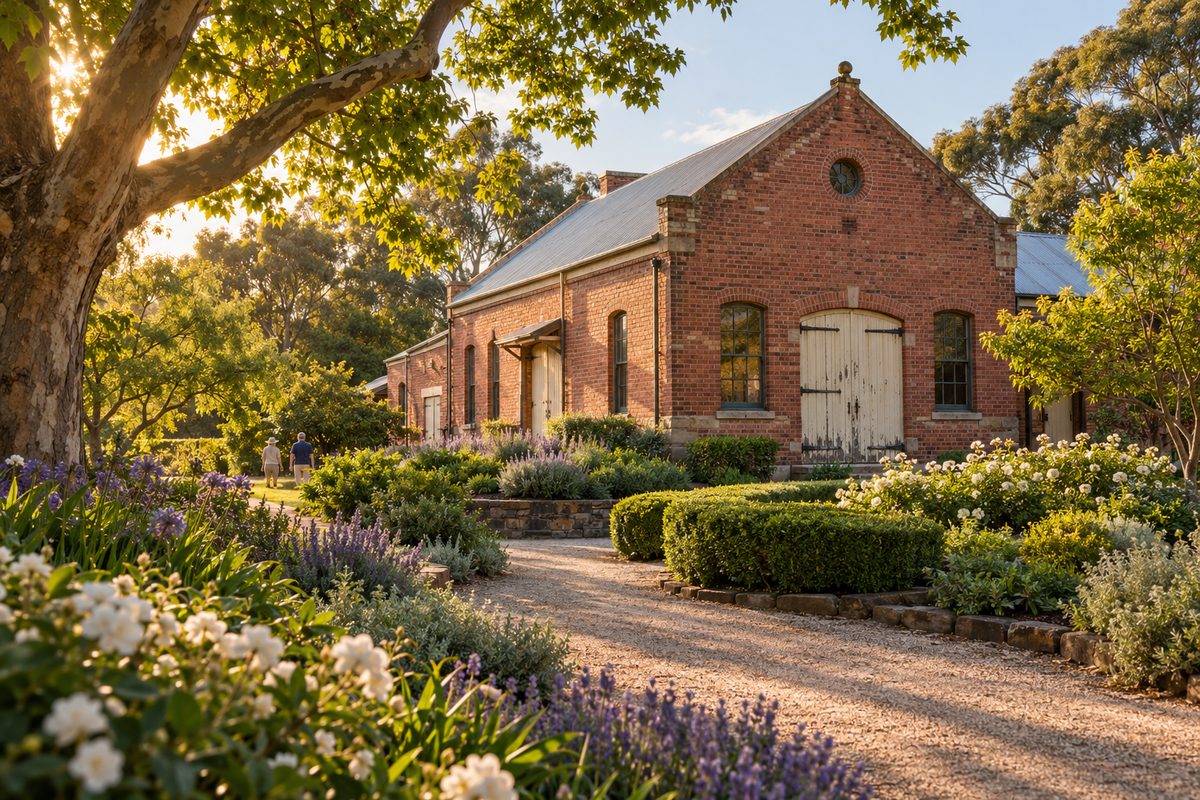
The gardens at the Old Cheese Factory are best enjoyed as a heritage farm setting rather than a formal botanic garden, so go for the history, the old trees and a slow wander. If you arrive expecting labelled plant collections and big feature beds, the grounds can feel quiet. If you arrive knowing what the site once was, the same grounds make a lot more sense. This guide explains how to read the place, when to go and how to fit it into a wider day in Berwick, Victoria.
For more local guides, start at the Berwick Village Notes home page.
What are you actually walking into?
You are walking onto the grounds of a working rural building that has been turned into a community arts space. The Old Cheese Factory sits on Homestead Road and is run by the City of Casey as a community and arts venue. The grounds around it are the garden.
The building dates from the late Victorian era, when the Berwick district was farm country. Local dairy farmers needed a way to turn milk into something that would keep and travel. Fresh milk spoils fast. Cheese lasts. A local factory solved that problem.
Many factories like this in rural Victoria were set up as an agricultural cooperative. In a cooperative, the farmers who supply the milk share in the business. They pool their milk, process it in one place and split the return. That model let small family farms compete without each one needing its own equipment.
Why does the dairy history matter for a garden visit?
It changes what you notice. Dairy country was cleared for pasture, so the open lawns around the factory echo the paddocks that once surrounded it. The old trees are worth a closer look too, because some mature plantings on rural sites like this date from the farming years. Once you see the grounds as a former farm site, the wide open spaces stop looking empty and start looking right.
Berwick itself grew from a small rural township into a suburb of Melbourne, sitting around 40 km south-east of the city centre. The Old Cheese Factory is one of the few places where you can still picture the farming town that came before the housing estates.
How is this different from a botanic garden?
A botanic garden is built around plants. A heritage garden is built around a place. That is the single most useful thing to know before you go.
Wilson Botanic Park, also in Berwick, is the local botanic garden. It was created from a former quarry and is laid out with plant collections, lakes and walking paths. If you want to learn plant names or see planned seasonal displays, Wilson Botanic Park is the better choice.
The Old Cheese Factory works differently. Its grounds support the building and the people using it. You get shade, space, old trees and a historic backdrop. You do not get a curated plant collection.
Which one should you pick?
- Pick Wilson Botanic Park if your main goal is plants, long walks or photographing water and landscaped beds.
- Pick the Old Cheese Factory if you want a quieter, slower visit with a historic building, open lawn and the chance to catch a class, exhibition or community event.
Most guides treat these two as rivals. They are not. They suit different moods, and they sit close enough to each other that you can visit both in one day.
What should you look for as you walk the grounds?
Look for the story of the site rather than individual flowers. A good wander takes around 20 to 40 minutes if you stop to look properly.
The factory building
Start with the building itself. Walk around the outside before you go near the gardens. Notice how a working factory was designed for function. Rural factories were placed and shaped for practical jobs like receiving milk cans from farm carts and keeping the processing rooms cool. Then look at how the arts venue has adapted those spaces for a new use.
The mature trees
The big old trees give the grounds their character. They also give you the best shade, which matters on a warm Melbourne afternoon. Stand under them and look back at the building. This is the view most visitors remember.
The open lawns
The lawns are not wasted space. They are what lets the site host community events and outdoor gatherings. They also hint at the open farmland that once rolled out from here across the district.
Garden beds and community plantings
Community venues often have smaller planted areas tended by staff, volunteers or local groups. What is planted can change over time. Treat these beds as a bonus rather than the main event, and check the City of Casey's information for the current setup before you plan around them.
When is the best time to visit?
Go on a weekday morning in spring or autumn for the calmest, most comfortable visit. Those seasons give mild weather and good light under the trees.
Here is how the seasons tend to play out for an open, tree-heavy site in south-east Melbourne:
- Spring: fresh growth and mild days. This is the most pleasant time for a long wander.
- Summer: the shade from the old trees becomes the main reason to go. Arrive early before the afternoon heat.
- Autumn: settled weather and softer light. A good season for photos of the building.
- Winter: the lawns can get soggy after rain. Wear proper shoes and keep the visit short.
Should you time your visit around events?
Yes, if you want atmosphere. No, if you want quiet. Because the site is an active arts venue, classes, exhibitions and community events bring people and noise. Check what is on before you go, then decide which kind of visit you want.
Hypothetical example: a visitor who wants to sketch the building in peace turns up on a Saturday and finds a busy event filling the lawns. A quick look at the venue's program the night before would have pointed them to a quiet weekday instead.
How do you enjoy a picnic here without getting in the way?
Bring a light picnic, set up on open lawn away from doorways and paths, and take every scrap of rubbish home. That keeps you clear of people using the venue.
The key thing to remember is that this is a working community building. People come for classes and bookings. A picnic rug blocking a path or a group spread out near an entrance makes their day harder. Pick a spot under a tree, off to the side, and you get the best of the grounds without causing friction.
A few practical points:
- Bring your own seating or a rug. Do not count on spare tables.
- Pack water, especially in summer.
- Keep music low or leave the speaker at home.
- Check current rules on dogs, barbecues and alcohol with the City of Casey before you go, as council rules can change.
If a full family picnic with play equipment is your main goal, a larger park may suit you better. Our Berwick guides on the home page compare the local picnic options in more detail.
How do you get there and where do you park?
Drive or take a short car or bike trip from central Berwick to Homestead Road. The site sits in a residential part of Berwick, so the last stretch is through suburban streets.
From Melbourne, most visitors drive out along the Monash Freeway towards Berwick. If you come by train, Berwick station on the Pakenham line puts you in the area. From there, the walk to Homestead Road is long enough that many people prefer a short ride or a taxi, especially with picnic gear.
What about parking?
On-site parking at community venues can fill when classes or events are running. Arrive early on event days. If the car park is full, park legally in nearby streets and respect driveways. Residents live right around the site.
How do you turn this into a full day in Berwick?
Pair the Old Cheese Factory with Wilson Botanic Park and finish in Berwick Village. Each stop covers something the others lack.
A simple route could look like this:
- Morning at the Old Cheese Factory. Walk the grounds while it is quiet. Look at the building and the trees.
- Late morning at Wilson Botanic Park. Swap history for plants and lakes. Walk the paths and enjoy the landscaped beds.
- Lunch in Berwick Village. The High Street area has cafes and older buildings that continue the heritage theme of the morning.
- Optional afternoon return. If an exhibition or event is on at the Old Cheese Factory, head back to catch it.
This order works because you see the farming history first, then the designed garden, then the old town centre. The day tells the story of how Berwick, Victoria grew from dairy country into the suburb it is now.
What mistakes do visitors make?
The most common mistake is expecting a showpiece garden. People who arrive hoping for big floral displays often leave thinking they missed something. They did not miss anything. They came with the wrong picture in mind.
Other mistakes worth avoiding:
- Skipping the building. The garden only makes sense next to the factory. Walk around it first.
- Arriving at the hottest time of day in summer. The shade helps, but open lawns still heat up fast.
- Ignoring the event program. A busy event day and a quiet weekday feel like two different places.
- Treating it like a sports oval. Ball games and loud groups clash with the venue's purpose. Save those for a bigger park.
- Relying on old information. Opening times, facilities and rules can change. Check the City of Casey's current details.
Why is this place worth your time?
Because it is one of the few spots where the dairy past of the Berwick district is still visible. Much of the farmland is now housing. The factory and its grounds give you a real, physical link to the families who once farmed here and pooled their milk to make a living.
That link is easy to walk past. Spend a few minutes reading the building and the lawns, and the visit becomes a small history lesson you can take in at your own pace.
What should you do next?
Plan one weekday morning visit, walk the building before the gardens, and pair it with Wilson Botanic Park the same day.
Your action points:
- Check the City of Casey's page for the Old Cheese Factory to confirm opening hours, rules and what events are on.
- Choose a quiet weekday morning in spring or autumn if you want calm.
- Pack water, a rug and a light picnic, and plan to take your rubbish home.
- Walk around the factory building first, then explore the trees and lawns.
- Map a route on to Wilson Botanic Park and Berwick Village to make a full day of it.
- Browse more local guides on Berwick Village Notes to plan your next stop.