Berwick Community Venues for Hire
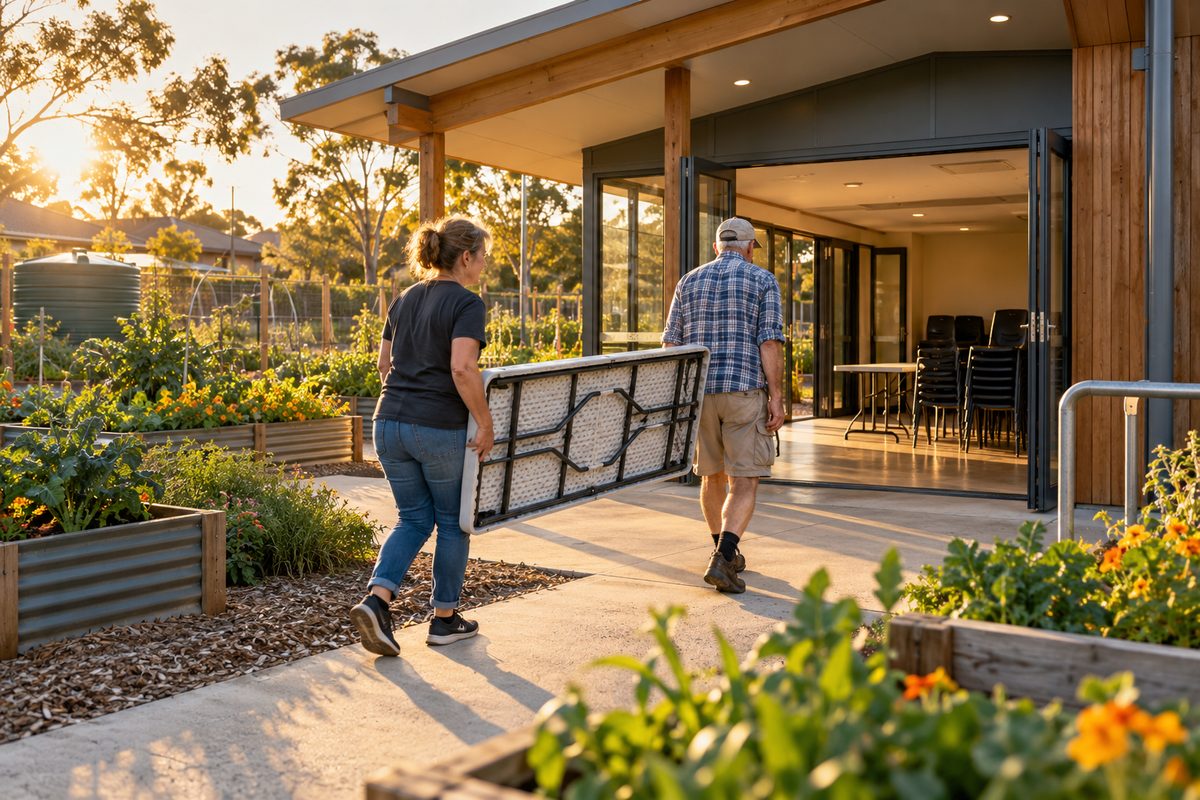
Most community venues for hire in Berwick are run by the City of Casey or by local community organisations, and you book them by matching your event to the right room, then sorting out insurance and paperwork early. Council halls and community centres are usually the cheapest option for meetings, classes, parties and fundraisers. Private function rooms cost more but often include catering, staff and furniture. The right choice depends on three practical questions: how many people are coming, whether you need a kitchen, and whether your group can show proof of cover.
This guide explains how hiring works in Berwick, Victoria, what trips people up, and how to pick a space that suits your event. For more local guides, visit Berwick Village Notes.
Who actually owns the halls and rooms in Berwick?
Most public halls, community centres and sports pavilions in Berwick belong to the City of Casey. Casey is one of the 79 local government areas of Victoria, and it covers Berwick along with nearby suburbs such as Narre Warren, Beaconsfield, Clyde and Cranbourne. Casey City Council owns the buildings and sets the hire rules, fees and conditions.
Day to day, though, a venue might be managed in one of two ways:
- Council managed. You book through the council's facility hire system and deal with council staff.
- Committee or tenant managed. A local group, such as a neighbourhood house or sporting club, runs the building under an agreement with council. You book directly with that group.
This matters because the booking contact, the price list and the cancellation rules can differ even between two halls a few streets apart. Before you ring around, check who manages the specific venue. The council website lists its bookable facilities, and community-run spaces usually post hire details on their own sites.
What about private venues?
Berwick also has private options. Cafes and restaurants along High Street sometimes offer back rooms or exclusive bookings, and church halls and school halls may be available outside their own use. These are separate from council rules. Each owner sets its own terms, so read their booking conditions closely. If you are planning a morning catch-up rather than a formal event, our guide to breakfast in Berwick covers places that suit small groups.
How do you match the room to the event?
Start with headcount and activity, then work backwards to the room. People often fall for a venue first and only later find it can't legally hold their numbers or doesn't allow their activity.
Every public hall has a maximum capacity set for safety. That figure is a ceiling, not a target. A hall rated for 120 people standing might seat only 70 at round tables with a dance floor and a food station.
Use this rough sorting guide:
- Meetings, workshops and committee sessions (10 to 30 people). A meeting room in a community centre or neighbourhood house is usually enough. These rooms tend to have tables, chairs, a whiteboard or screen, and access to a tea-making area.
- Classes and regular groups (15 to 40 people). Look for a multipurpose room with clear floor space and a hard floor. Yoga, dance and playgroups need room to move more than they need a stage.
- Children's parties and family gatherings (30 to 80 people). A small hall with a kitchen works well. Check whether there is an outdoor area and whether it is fenced.
- Fundraisers, dinners and community celebrations (80 people or more). You need a larger hall with a commercial or well-equipped kitchen, enough toilets and good parking.
A function space and a community hall are different things, even when they look alike in photos. A function space at a private venue usually comes with staff, linen, a bar licence and a set menu. A community hall usually comes empty. You bring the food, set up the chairs, clean up and leave it as you found it. The hall is cheaper because you do the work.
A hypothetical example
Here is a made-up scenario to show how this plays out. A local parents' group wants to hold a trivia night for 90 people. They find a lovely small hall with a stage. On paper it fits 100. But once they add 12 round tables, a bar station and a raffle table, the room feels crowded and the exits get blocked. A larger hall a short drive away in Narre Warren costs a bit more per hour but holds the setup comfortably. The extra spend buys a safer night and fewer complaints.
Why does insurance stop so many bookings?
Insurance is the single most common reason a booking stalls. Most council venues in Victoria ask hirers to hold public liability insurance before the booking is confirmed. Liability insurance covers you if someone at your event is injured or property is damaged and you are found responsible.
Councils commonly ask for cover of at least $20 million, though you should always check the current figure in the hire conditions for your chosen venue. The certificate usually needs to name your group, show the cover amount and be valid on the event date.
Who needs what depends on the type of hirer:
- Incorporated groups and clubs often already hold an annual policy. Ask your treasurer or secretary for a current certificate of currency.
- A nonprofit organization that runs regular programs will usually have cover through its own policy or a peak body. Check that the policy covers hiring other people's premises.
- Individuals and informal groups, such as a family hosting a birthday, often have no cover at all. Many councils offer, or point hirers to, casual hirer cover that can be bought for a single event. Ask the booking officer whether this is available for your venue.
Most people miss one detail: your home and contents policy rarely covers an event you run at another venue. Don't assume. Call your insurer, or buy one-off cover.
What other paperwork might you need?
Depending on the event, you may also need:
- A liquor licence or permit if you plan to sell alcohol, or in some cases supply it. In Victoria, this goes through the state liquor regulator. Free BYO arrangements at a private party follow different rules from selling drinks at a fundraiser, so check which applies.
- Food handling registration if your group sells food to the public. Casey City Council's health team can advise on temporary food premises.
- A bond, which is refunded if the venue is returned clean and undamaged.
- Working with Children Checks for volunteers if your regular program involves children.
Sort these early. Several of them take more than a week to come through.
How much does it cost, and who pays less?
Community venues are usually charged by the hour, with different rates for weekdays, evenings and weekends. Saturday nights are typically the most expensive and the most booked.
Councils often run tiered pricing. A community group or nonprofit organization based in the area may pay a lower rate than a private individual or a business. A commercial hirer, such as a fitness instructor running paid classes, usually pays the highest rate. If your group is eligible for a community rate, say so when you enquire and have your incorporation details ready.
When comparing quotes, add up the full cost, not just the hourly rate:
- Set-up and pack-down time. Many venues charge from when you arrive, not from when guests arrive.
- Kitchen use, which can be an extra fee.
- The bond.
- Cleaning fees if the hall is left messy.
- Casual insurance if you don't already have cover.
A hall at a low hourly rate can end up costing more than a private function space once you add six hours of hire, catering hire and cleaning. On the other hand, a council hall is almost always cheaper for a regular weekly class, because you only pay for the time you use.
Should you look beyond Berwick itself?
Yes, if your date is popular or your event is large. Berwick sits close to several suburbs with their own community facilities, and the drive between them is short.
- Narre Warren is home to Bunjil Place, the council's arts and civic centre, which offers larger rooms and a more formal setting for conferences, performances and bigger functions. Narre Warren also has community centres for everyday hire.
- Beaconsfield, Victoria, just east of Berwick, has its own local halls and community spaces. These can be quieter and easier to book on weekends.
Because these venues all sit within the City of Casey, the booking process and hire conditions for council-owned spaces are often similar. That makes it easy to compare a Berwick hall with one in a neighbouring suburb using the same checklist.
Guests rarely mind a ten-minute drive. They do mind cramped rooms, no parking and a venue they can't find. Pick the room that suits the event, even if it is a suburb over.
What do first-time hirers usually get wrong?
A handful of small mistakes cause most of the stress on the day. None of them are hard to avoid.
Booking too late
Popular halls fill up for weekends around school holidays, end-of-year parties and long weekends. Regular hirers, such as clubs and classes, often book whole terms ahead. Enquire as soon as you have a date. For a December party, that can mean asking in winter.
Not visiting first
Photos hide a lot. Visit before you pay. Check where the light switches, heating and cooling controls are. Count the chairs and tables. Look at the kitchen and ask what equipment stays in it. Find out where the bins go and whether you need to take rubbish home.
Forgetting the neighbours
Many Berwick halls sit in residential streets. Hire conditions usually set a finish time and noise limits, and some ban amplified music after a certain hour. If your event runs late, ask about this before you book a DJ.
Missing the key handover
Ask exactly how you get in. Some venues use key pickup during office hours, some use a lockbox and some use access codes. A Saturday event can go wrong fast if the key had to be collected on Friday.
Leaving the clean-up vague
Bond deductions usually come down to cleaning. Read the cleaning checklist before the event and assign two or three people to it. Take photos of the room when you arrive and when you leave. That gives you a record if there is any dispute later.
How do you make the booking process smooth?
Treat the booking like a short project with a clear order. In practice, these steps work in sequence:
- Set the basics. Write down the date, start and finish times, expected numbers and the main activity.
- Shortlist two or three venues. Include at least one outside your first-choice suburb as a backup.
- Confirm who manages each venue. Council, committee or private owner.
- Ask the key questions. Capacity for your layout, kitchen access, parking, finish time, alcohol rules, accessibility and total cost including bond.
- Sort insurance. Get your certificate of currency or arrange casual cover.
- Inspect the venue. Check the space against your plan.
- Book and pay. Keep the confirmation, the conditions and the access instructions in one place.
- Brief your helpers. Share set-up times, the cleaning checklist and the key arrangements a week out.
If you run a regular program, such as a weekly class or support group, ask about ongoing or seasonal bookings. These are often handled separately from one-off events and can lock in your time slot for a full term. Local neighbourhood centres also run their own programs and may know which rooms suit which activities, so they are worth asking even if you end up booking elsewhere.
Your next step
Write your headcount, activity and date on one page, then ring the managing body of your top two venues this week and ask one question first: what insurance do you need from me? That answer tells you how ready you are, and everything else in the booking falls into place from there.
For more practical guides to local life, browse Berwick Village Notes.