Family Dining in Berwick
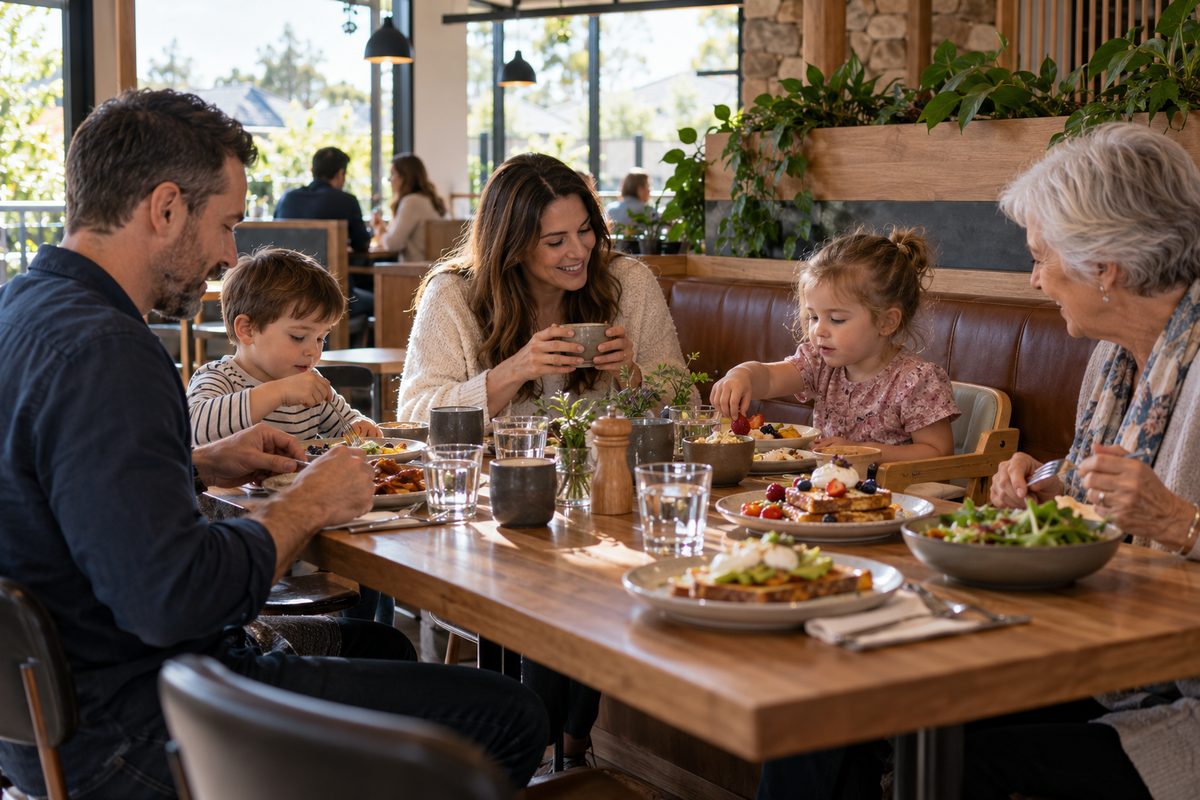
Family dining in Berwick goes best when you choose the venue by your children's ages and your meal time, then check the menu. Most families do it the other way around. They pick a place for the food, arrive at 6:30pm with tired kids and wonder why the night fell apart. The food matters. But in Berwick, Victoria, where you have plenty of choice within a short drive, the bigger wins come from timing, seating and a little planning before you leave home.
This guide sets out how to make those calls. It covers which kinds of venues suit which ages, when High Street is the right pick and when to look further out, how to read a menu for kids, how to handle allergies and when take-out beats a table. For more local guides, visit Berwick Village Notes.
Why does the time you eat matter more than where you eat?
An early sitting fixes most family dining problems before they start. Book or arrive between 5pm and 5:30pm and you get a quieter room, faster food and staff with time to help.
Here is how it works. Most restaurant kitchens fill up from about 6:30pm on weekends. Once the dockets stack up, every order waits longer. For adults, a 25 minute wait is fine. For a three year old who has been sitting still for ten minutes already, it is a long time.
Early sittings also help with noise. A loud child in a half empty room bothers nobody. The same child in a full room at 7:30pm draws looks, and parents spend the meal trying to keep things calm instead of eating.
Hypothetical example: picture a family of four with a toddler and a seven year old. At 5:15pm on a Saturday, their food lands in 15 minutes and they are paying the bill by 6:10pm. At 7pm the same order might take 35 minutes, and the toddler is done before the mains arrive. Same venue, same food, a very different night.
If an early sitting does not work for your family, a late weekend lunch around 1:30pm does a similar job. The lunch rush has passed and the kitchen has room to breathe.
Which kind of venue suits which age?
Match the venue to your youngest child. The oldest can adapt. The youngest sets the limits for everyone.
Babies and toddlers
Look for space more than style. You want room for a pram, high chairs on hand and a table near the edge of the room so you can step out with an unsettled baby without squeezing past other diners. Cafés and casual bistros usually suit this age better than a formal dining room with tight tables and long courses.
Short meals win here. Aim for one course, shared plates and a plan to leave within an hour.
Primary school children
This is the easiest age for eating out. Kids can sit for longer, try new foods and follow simple table rules. Pubs with a family area, casual restaurants and pizza places all work well. A venue with an outdoor area or a nearby park gives restless kids somewhere to go while adults finish up.
This is also a good age to try new food. Children who see a plate of dumplings or a curry shared at the table often try a bite when nobody pressures them.
Teenagers
Teens care about the food and the feel of the place. A sit down meal at a proper restaurant can work well, and so can letting them choose. Giving a teenager the pick for one family meal a month is a simple way to get them to the table without complaint.
When is High Street the right choice, and when should you look further out?
High Street is the right choice when you want a short walk, a mix of options and a relaxed village feel. The strip runs through the old heart of Berwick, with cafés and restaurants close together. If one place has a long wait, another is a few doors away. That flexibility matters with kids.
The main drawback is parking at peak times and limited room inside some of the smaller venues. Prams and big groups can feel squeezed. Going early, as covered above, solves most of this.
Look further out in a few situations:
- Wet weather or a large group with mixed tastes. Westfield Fountain Gate in Narre Warren is one of the largest shopping centres in Australia. A food court in a big shopping center means every person can order something different, there is undercover parking and toilets are close by. It is a practical choice more than a special one.
- You want a quieter, more open setting. Beaconsfield, Victoria sits just east of Berwick and has its own cafés and pubs, often with more space and easier parking than the busiest parts of town.
- You need a specific cuisine. The wider City of Casey is one of Victoria's most culturally diverse council areas. That shows up in its food, with options spread across suburbs such as Narre Warren, Hallam and Cranbourne. A ten to fifteen minute drive opens up far more choice.
A simple rule: stay local on High Street for relaxed meals with small groups, and drive out when you need space, shelter or a particular kind of food.
How do you read a menu for kids before you book?
Check the menu online for two things: plain options and dishes that can be shared. A kids menu helps, but it is not the only sign a venue welcomes families.
Modern Australian cuisine is a good fit for mixed families because it tends to include simple grilled meats, roast vegetables and chips alongside more adventurous plates. Fussy eaters can find something plain, while adults still get an interesting meal.
Fusion cuisine needs a closer look. These menus often blend flavours from two or more food traditions, such as Asian sauces with Australian produce. The dishes can be great for adventurous kids, but sauces may be spicy or rich. Look for a plain rice dish, noodles or a protein served with sauce on the side.
Fish as food is worth a mention for young children. Grilled or crumbed white fish is soft, mild and easy to chew, which makes it a good choice for toddlers moving to adult food. Ask the staff to check for bones before serving. Most kitchens will do this without fuss.
Fish and chips remain a reliable family meal in Melbourne's south east. Nearly every child will eat at least the chips, and many shops now offer grilled fish as well as battered. It is one of the few meals where the whole family is likely to be happy.
A few menu signs that a venue suits families:
- Smaller portions or half serves on request
- Sauces and dressings listed so you can ask for them on the side
- Shared plates or platters
- Clear allergen notes or a statement that the kitchen can adjust dishes
How do you eat out safely with allergies or a gluten-free diet?
Call ahead, ask direct questions and order the simplest version of a dish. Do not rely on a menu symbol alone.
In Australia, food businesses must tell you about common allergens in their food if you ask, under the Food Standards Code. That gives you a right to clear answers, so use it. Ask about the ingredients, and also about how the food is cooked.
For a child on a gluten-free diet because of coeliac disease, cross contact is the real risk. Coeliac Australia estimates that about 1 in 70 Australians has coeliac disease, so many families deal with this. A dish made with gluten-free ingredients can still be unsafe if it is fried in the same oil as battered food or cut on a shared board. This matters most with fish and chips, where shared fryers are common. Ask whether the venue has a dedicated gluten-free fryer before you order chips.
Useful questions to ask when you call:
- Can you tell me which dishes contain the allergen my child needs to avoid?
- Do you use a separate fryer, board or prep area for gluten-free or allergy meals?
- Will the chef know about the allergy when the order goes through?
- Is there a quieter time when the kitchen can take more care?
That last question links back to timing. A kitchen at 5pm has more time to handle a special order carefully than the same kitchen at 7:30pm on a Saturday.
Coeliac Australia also runs an endorsement program for food businesses that meet its standards. Checking whether a venue is listed is a fast way to narrow your choices.
When is take-out the better family meal?
Take-out is the better choice when your kids are tired, unwell or too young to sit for long, or when you want a treat without the stress. It is a smart call, not a fallback.
Families often feel they have failed if a meal out turns into take-out. But a relaxed meal at home beats a tense one in a restaurant. Your own dining room comes with no wait, no noise worries and a bath straight after.
There is a middle option many families miss: take-out eaten outside. On a warm evening, collecting fish and chips or pizza and eating at a local park gives the kids room to run while adults still get a night off from cooking. Berwick has many parks and reserves within a short drive of High Street, which makes this easy.
Hypothetical example: a family plans dinner out, but their five year old has had a big day at school and is already fading at 4:30pm. Instead of pushing on with the booking, they order take-out, eat it on a picnic rug at a nearby reserve and are home by 6:30pm. Everyone gets the treat, and nobody melts down.
What do most family dining guides get wrong?
Most guides rank venues by how child friendly they look. Play areas and colouring sheets help, but they matter less than a few things guides rarely mention.
Where you sit counts more than the venue. A corner table or a spot near the door makes it easy to step out. A table in the middle of the room traps you. Ask for an edge table when you book.
Ordering everything at once helps. Ask for the kids' meals to come out first, and order your own meals at the same time. Children eat while adults wait, then adults eat while children finish up. Staff are used to this request.
Asking for the bill early is fine. Pay when the mains arrive, or let staff know you may need to leave quickly. If a child hits their limit, you can walk out in a minute instead of waving for the bill.
A kids menu is optional. Many children eat better from a shared adult plate than from a set kids meal of nuggets and chips. Ordering two or three dishes for the table often costs about the same and gets children trying new food.
Bringing a small activity bag beats relying on the venue. A few quiet toys or a book, kept for meals out only, holds attention much better than whatever the venue hands over.
What should you do before your next family meal out?
Plan around your youngest child and book the earliest sitting you can. That single step makes the biggest difference.
Then work through this short list:
- Book for 5pm to 5:30pm, or a late lunch around 1:30pm on weekends.
- Ask for an edge or corner table when you book, and mention a pram or high chair if you need one.
- Check the menu online for plain options, shared plates and sauces you can ask for on the side.
- Call ahead about allergies or a gluten-free diet, and ask about shared fryers and prep areas.
- Pick High Street for small, relaxed meals, and drive to Narre Warren or Beaconsfield when you need more space, shelter or a certain cuisine.
- Order kids' meals first and settle the bill early.
- Keep take-out as a planned option, not a failure, for nights when the kids are running on empty.
For this weekend, choose one place, call to book the earliest table they have and ask for a seat near the door. Get those two things right and the rest of the meal tends to follow.